

Causely Blog
Loading featured posts...
Loading posts...
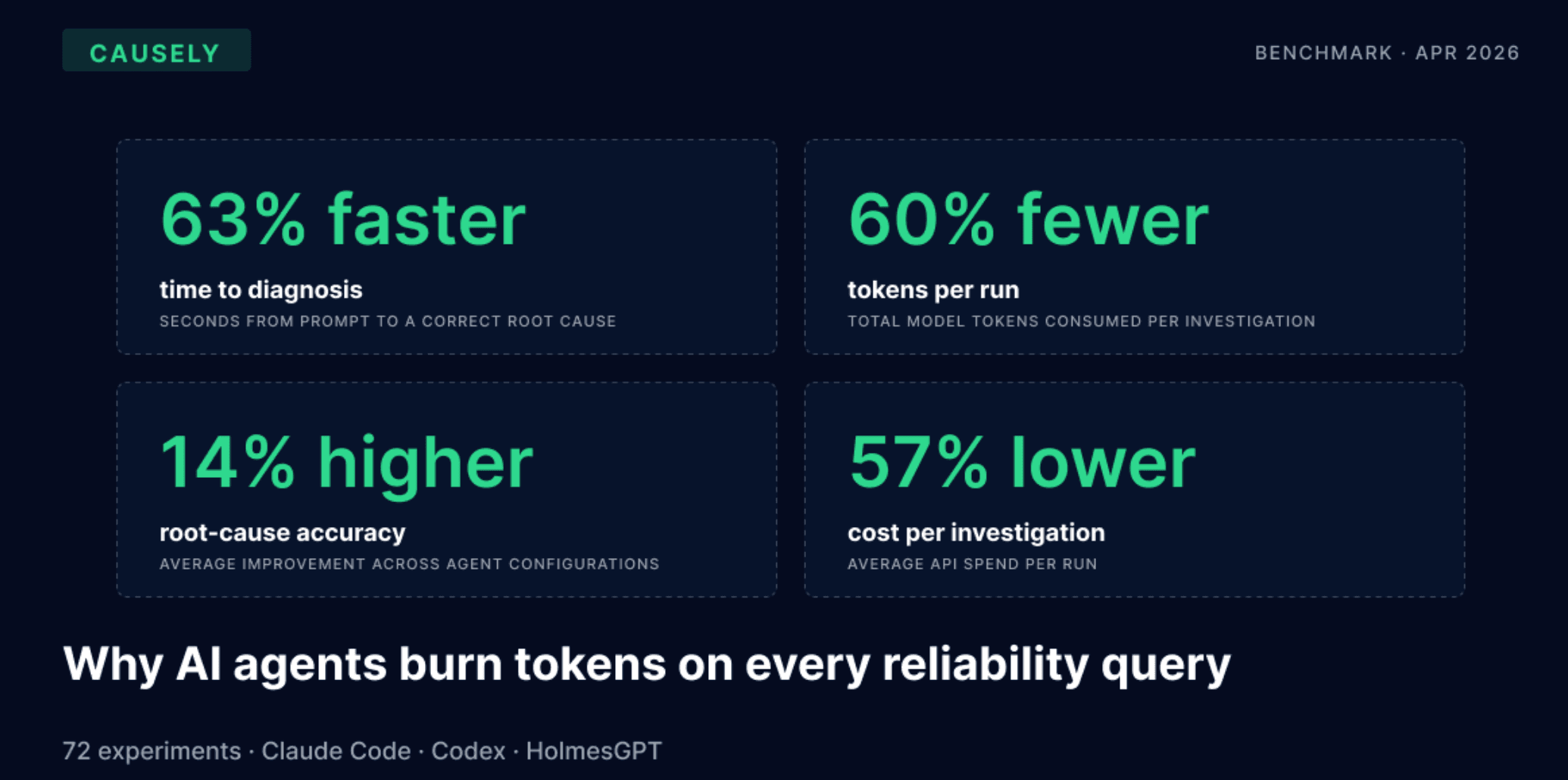
AI agents reconstruct environment state from raw telemetry on every reliability query. Causal context eliminates the reconstruction and cuts token use by 60%.

Ben Yemini
April 22, 2026
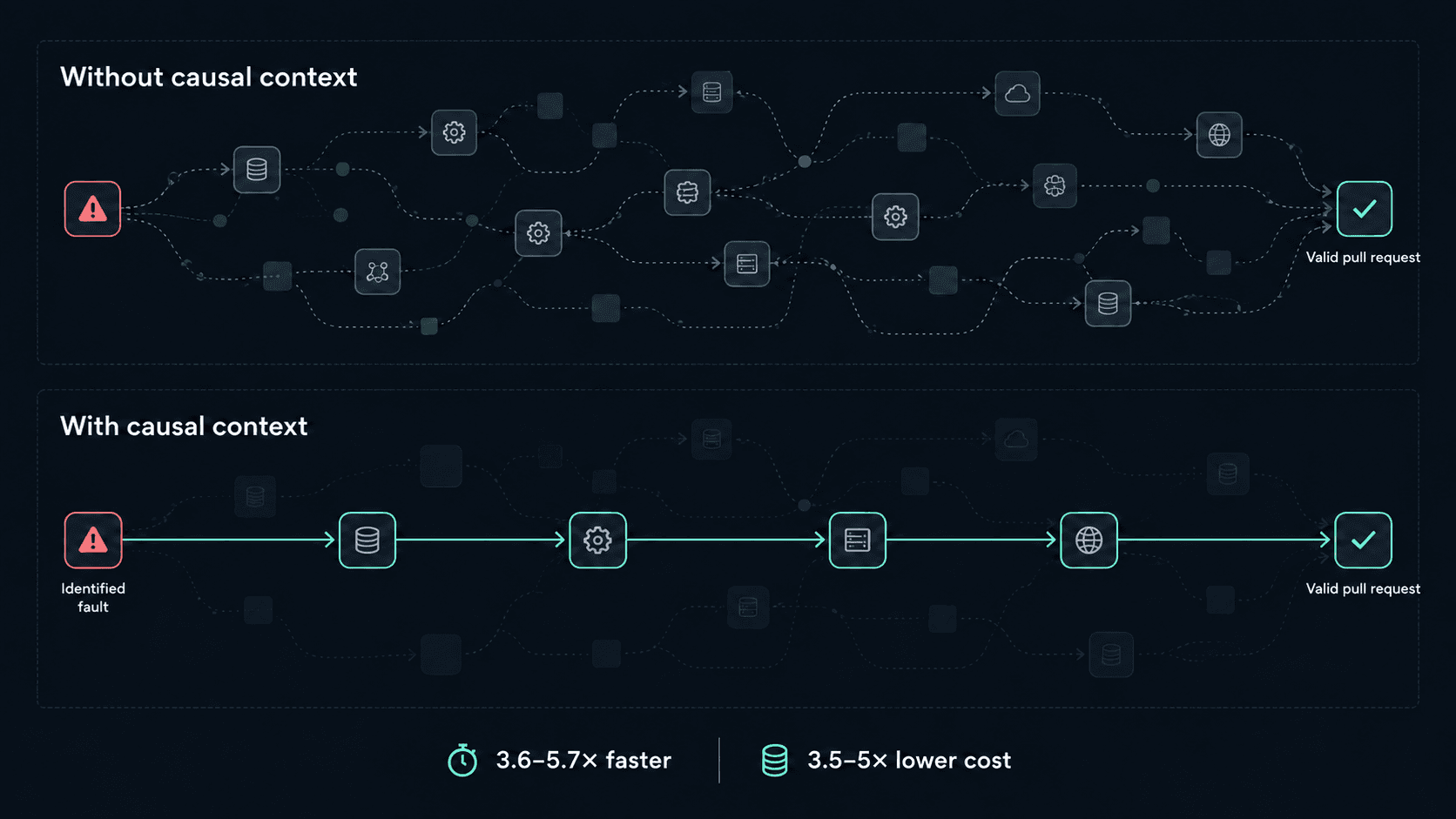
In three regression scenarios, Claude Managed Agents with Causely produced correct fixes 3.6–5.7x faster and at 3.5–5x lower cost than the baseline agent.

Ben Yemini
September 23, 2026
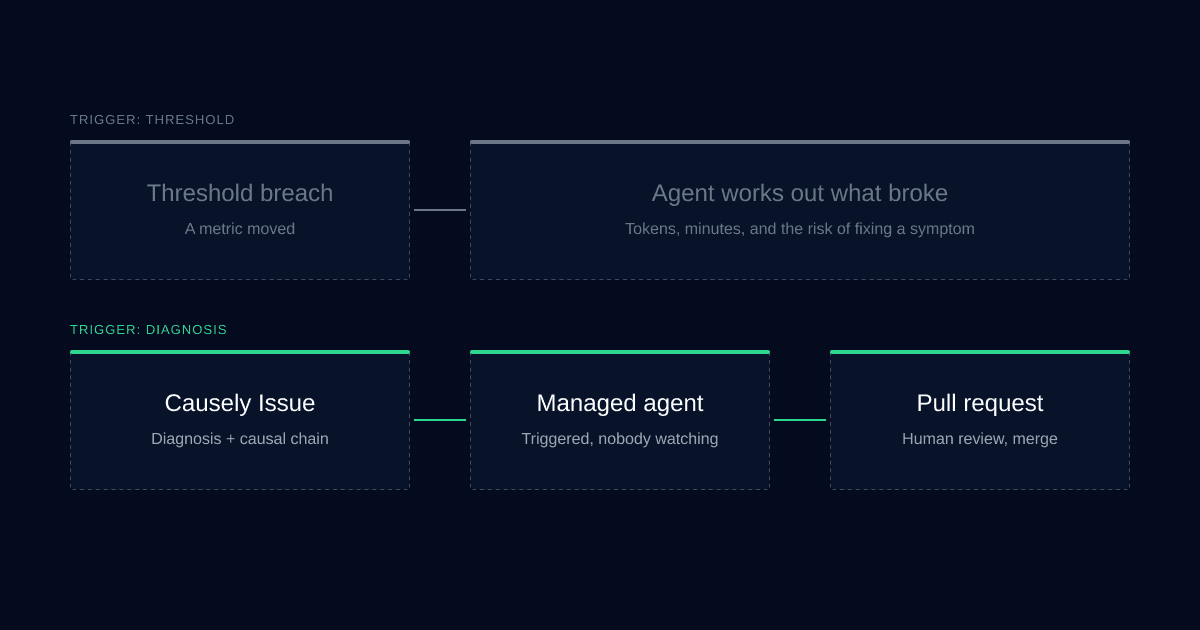
A control band breach tells an autonomous agent only that a metric moved. A trigger carrying a causal chain tells it what broke and how far the problem reaches.
Ben Yemini
September 10, 2026
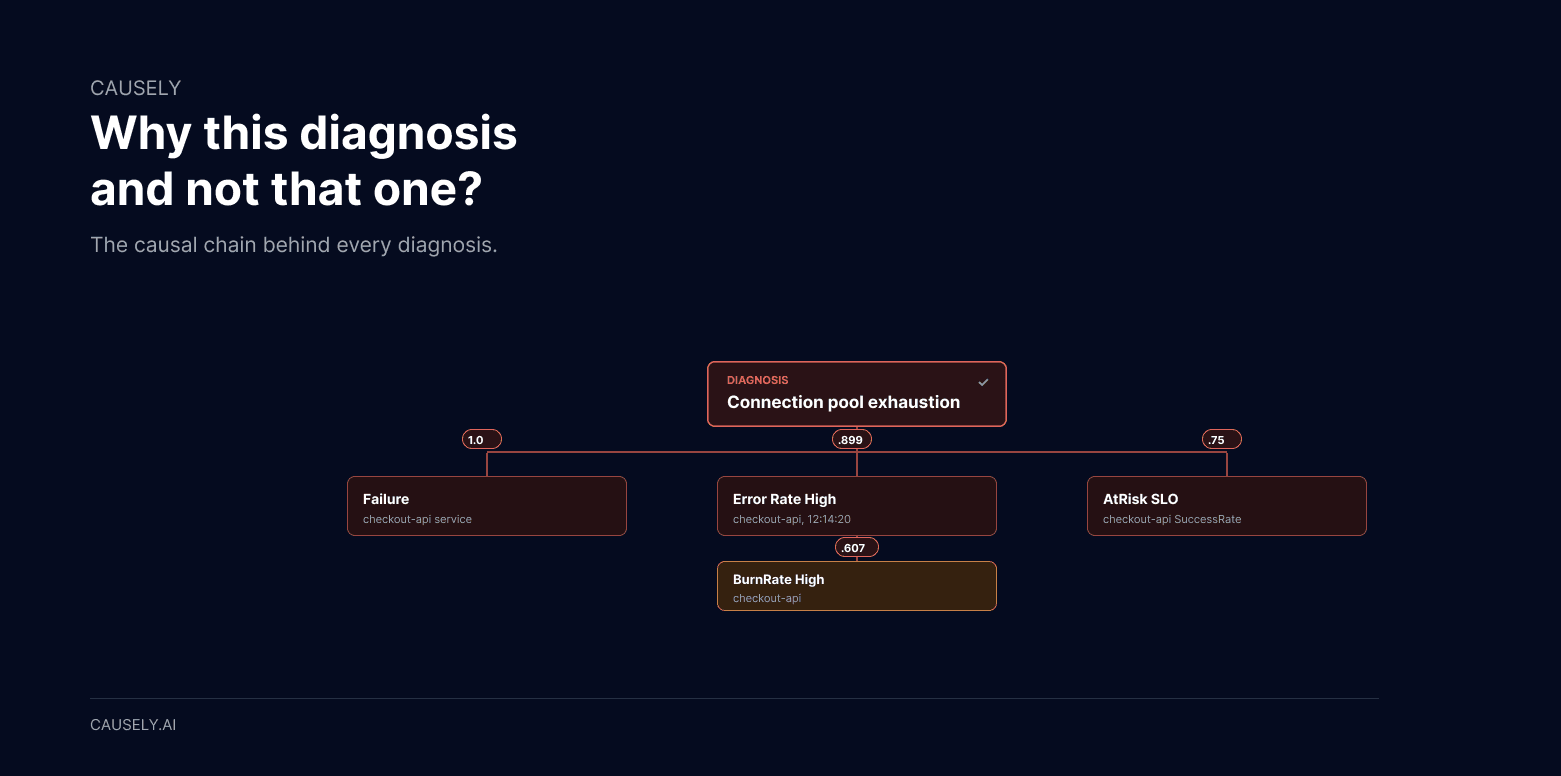
New Causely MCP tools show which diagnoses an agent ruled out and how far a failure would spread, so teams can verify the agent's reasoning before acting in production.
Ben Yemini
September 2, 2026
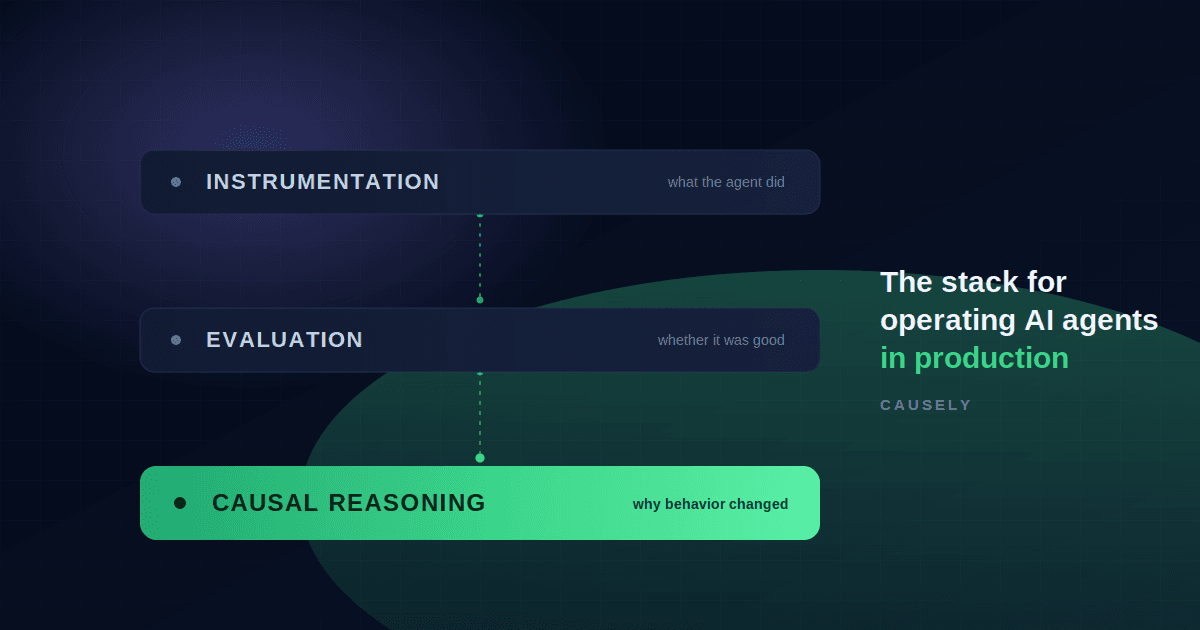
Operating AI agents in production takes three layers: instrumentation, evaluation, and causal reasoning, including the root-cause analysis behind agent reliability.

Yotam Yemini
August 20, 2026
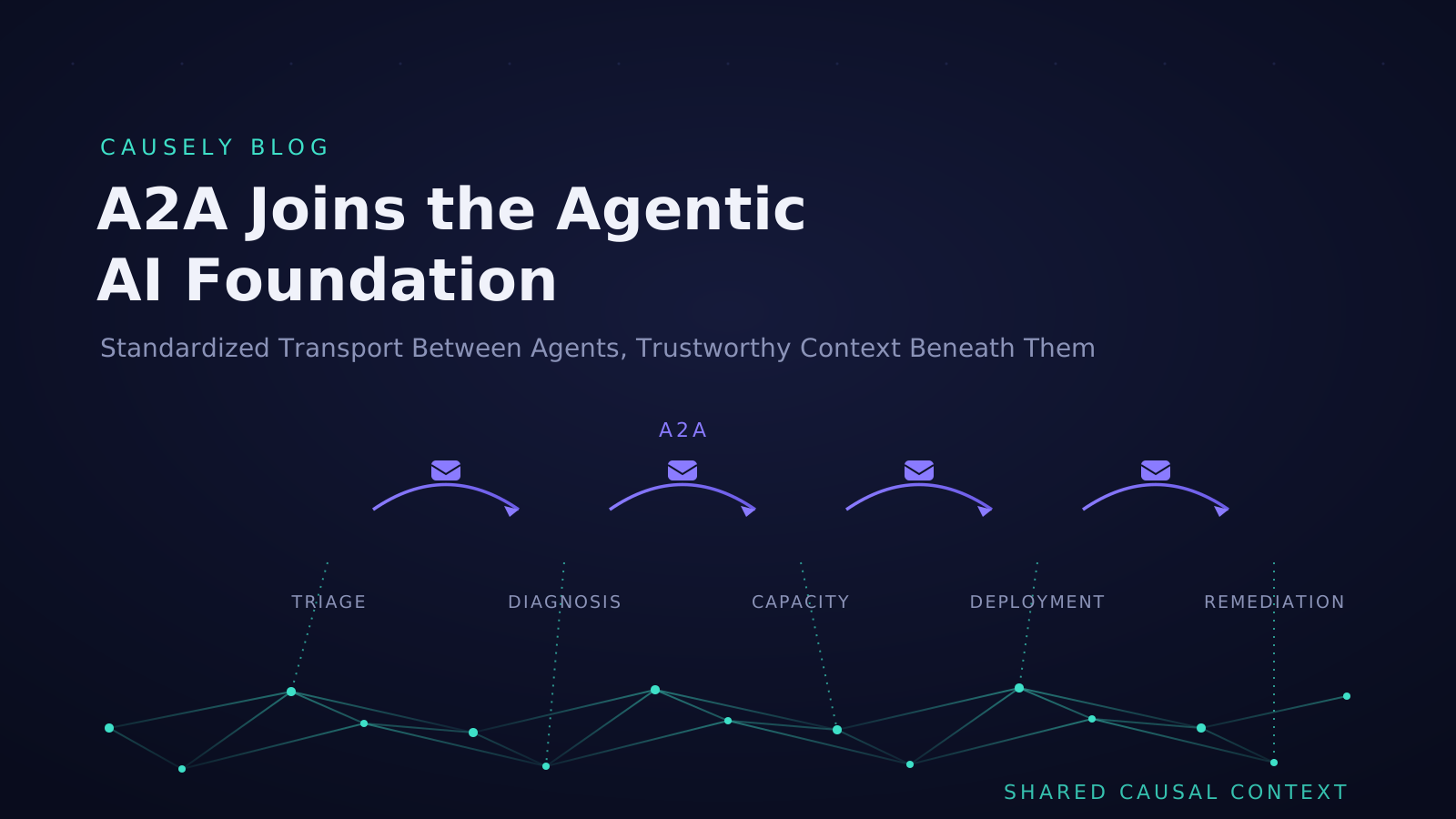
Causely joins the AAIF along with A2A from Google. Agents can now talk over an open standard, but what they say is only as good as the context they start from.
Yotam Yemini
August 17, 2026
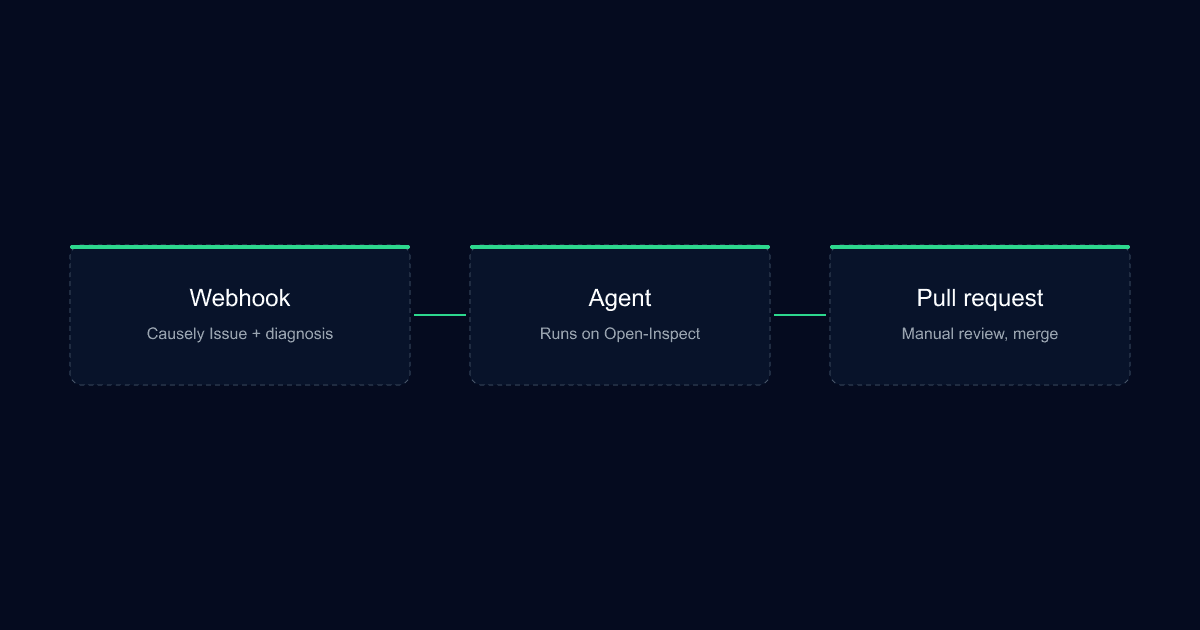
Open-Inspect gives background agents an execution environment. Causely gives them a causal diagnosis. Together, they close the loop from finding to fixing.

Enlin Xu
August 13, 2026
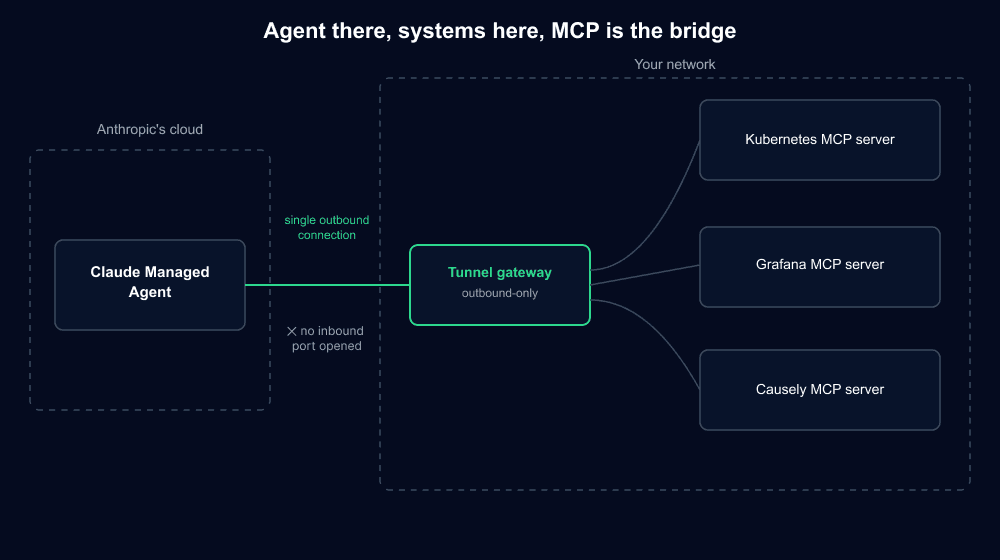
MCP tunnels let Claude Managed Agents reach and authenticate to real infrastructure, but access alone doesn't make an agent one you'd trust to run on-call.
Ben Yemini
August 7, 2026
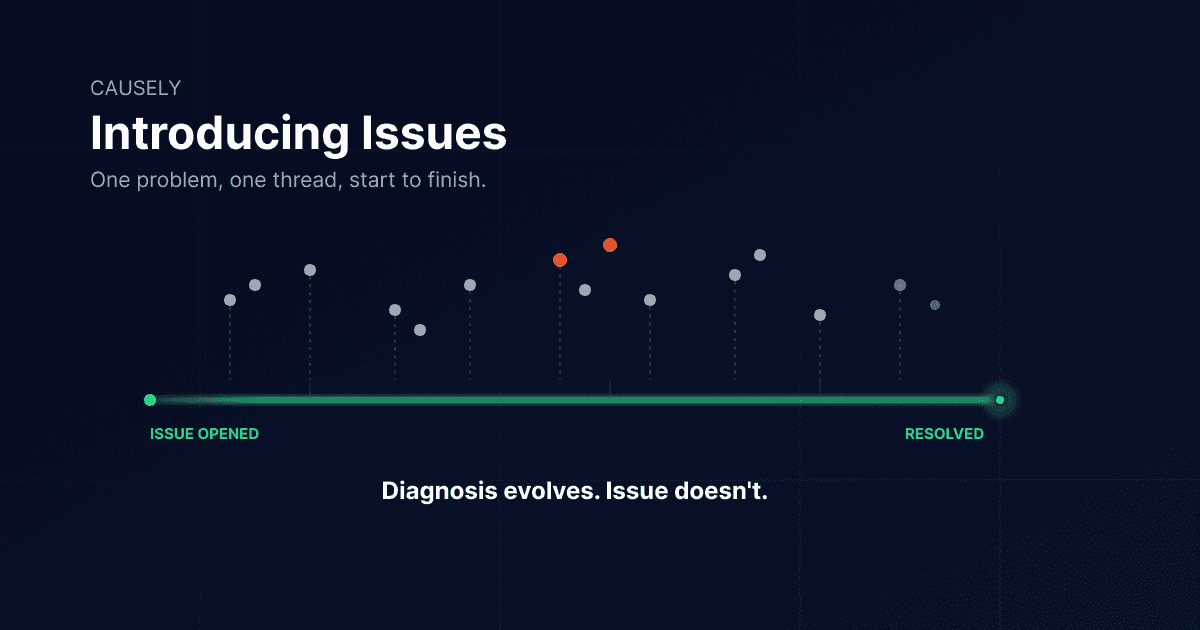
On-call means re-triaging the same problem as diagnoses shift underneath you. Causely's new Issues give people and agents one stable thread instead.
Ben Yemini
July 31, 2026
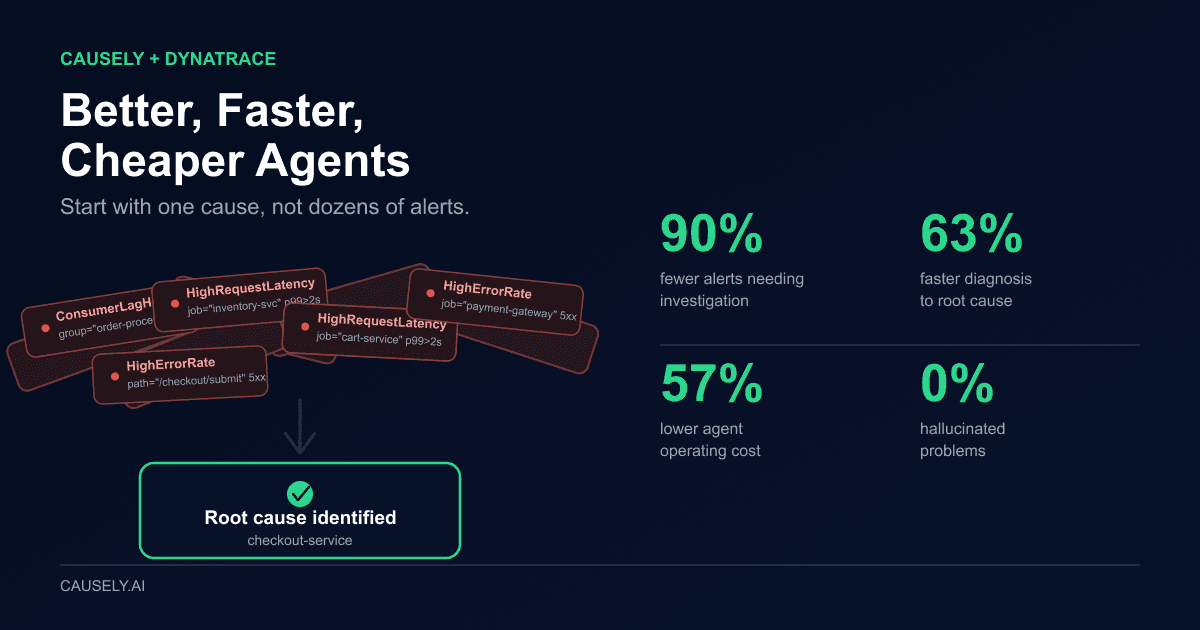
Causely turns Dynatrace entities, topology, and alerts into a causal model that names the root cause, making on-call agents better, faster, and cheaper.
Ben Yemini
July 24, 2026
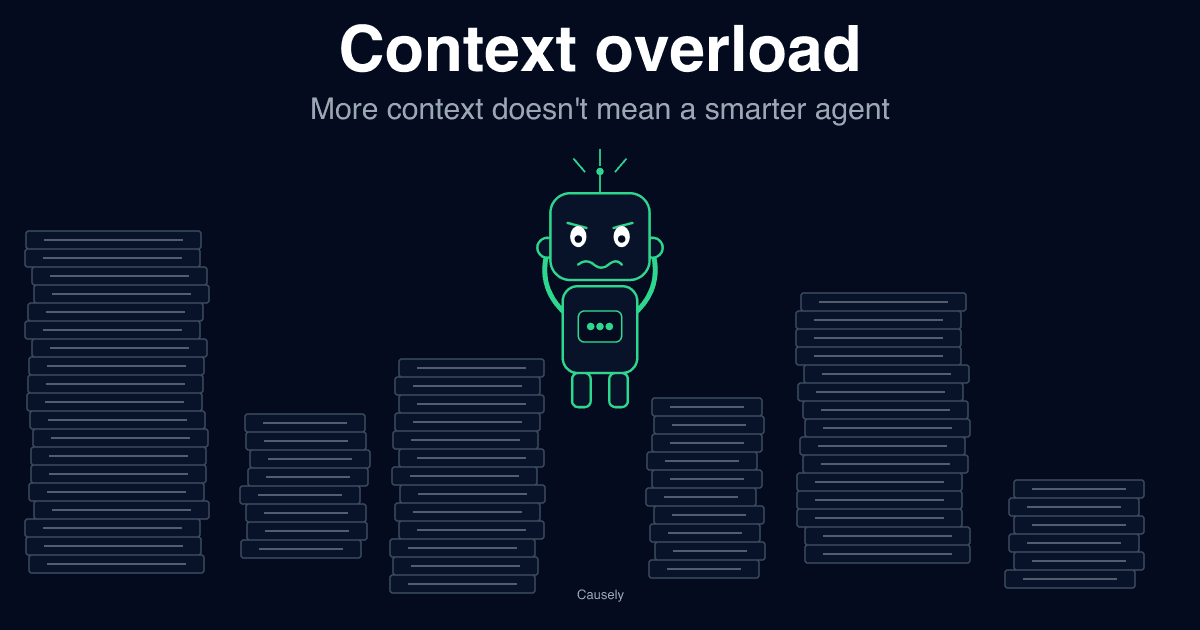
Most frontier LLMs degrade badly by ~1,000 tokens of input, not the millions in their spec sheets. For on-call agents, that means accuracy drops exactly as an incident gets complex. The fix isn't a bigger model. It's not handing the LLM the raw data at all.
Ben Yemini
July 17, 2026

Getting OpenTelemetry into Java enterprise applications without touching the JVM has been a persistent gap. OBI changes that, and for Causely customers, it unlocks the topology data needed to pinpoint root causes across complex Java microservice architectures.

Endre Sara
June 18, 2026
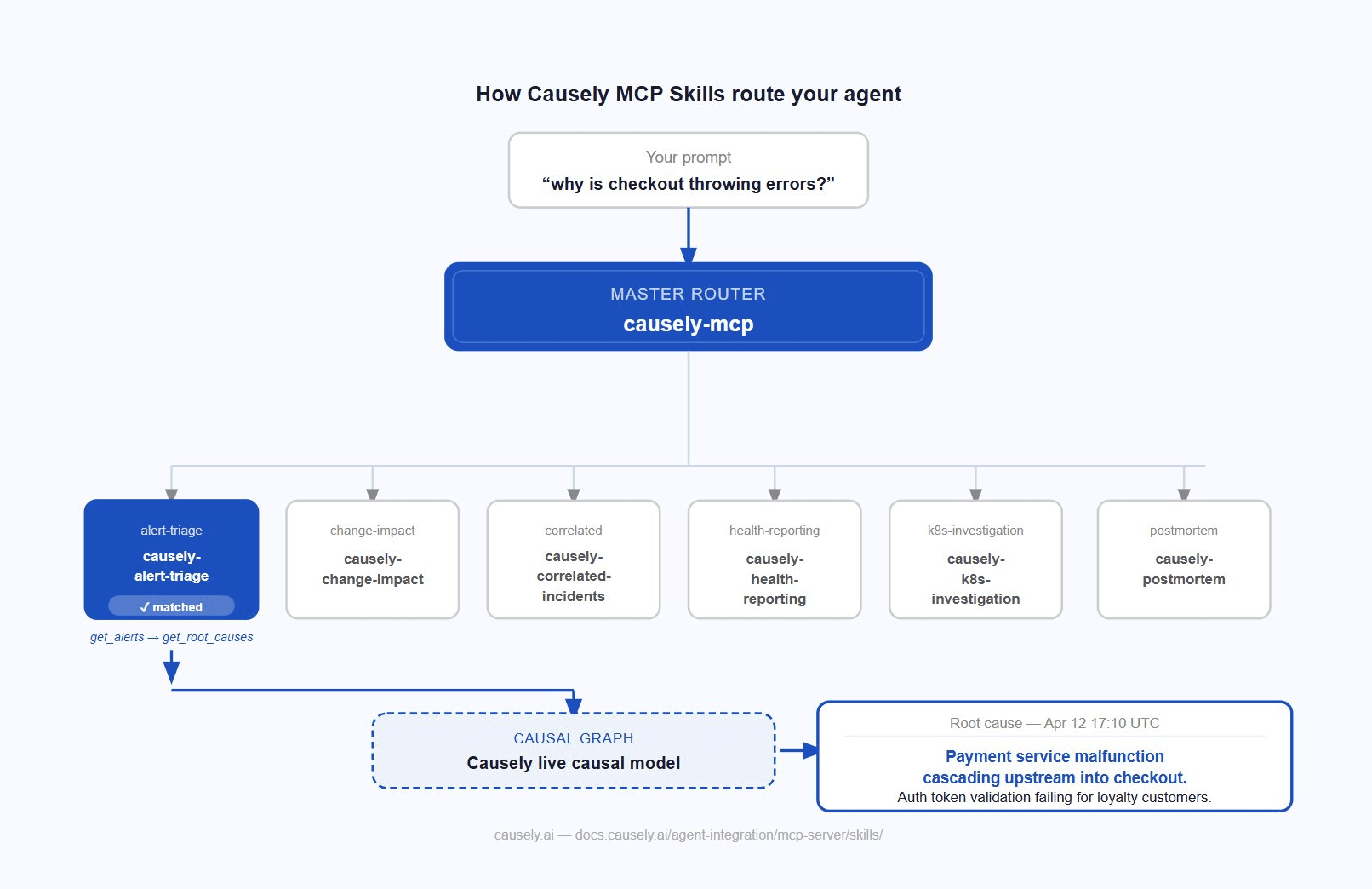
Causely MCP Skills are live. One master router + six specialist workflows: alert triage, change impact, K8s investigation, postmortems & more. Describe your situation, Skills pick the right tools. No prompt engineering. No orchestration.

Anson McCook
June 3, 2026

Observability semantics fall into six layers, from entity inventory to constraints. Most tooling reaches layer two. This post defines all six precisely.
Endre Sara
June 2, 2026
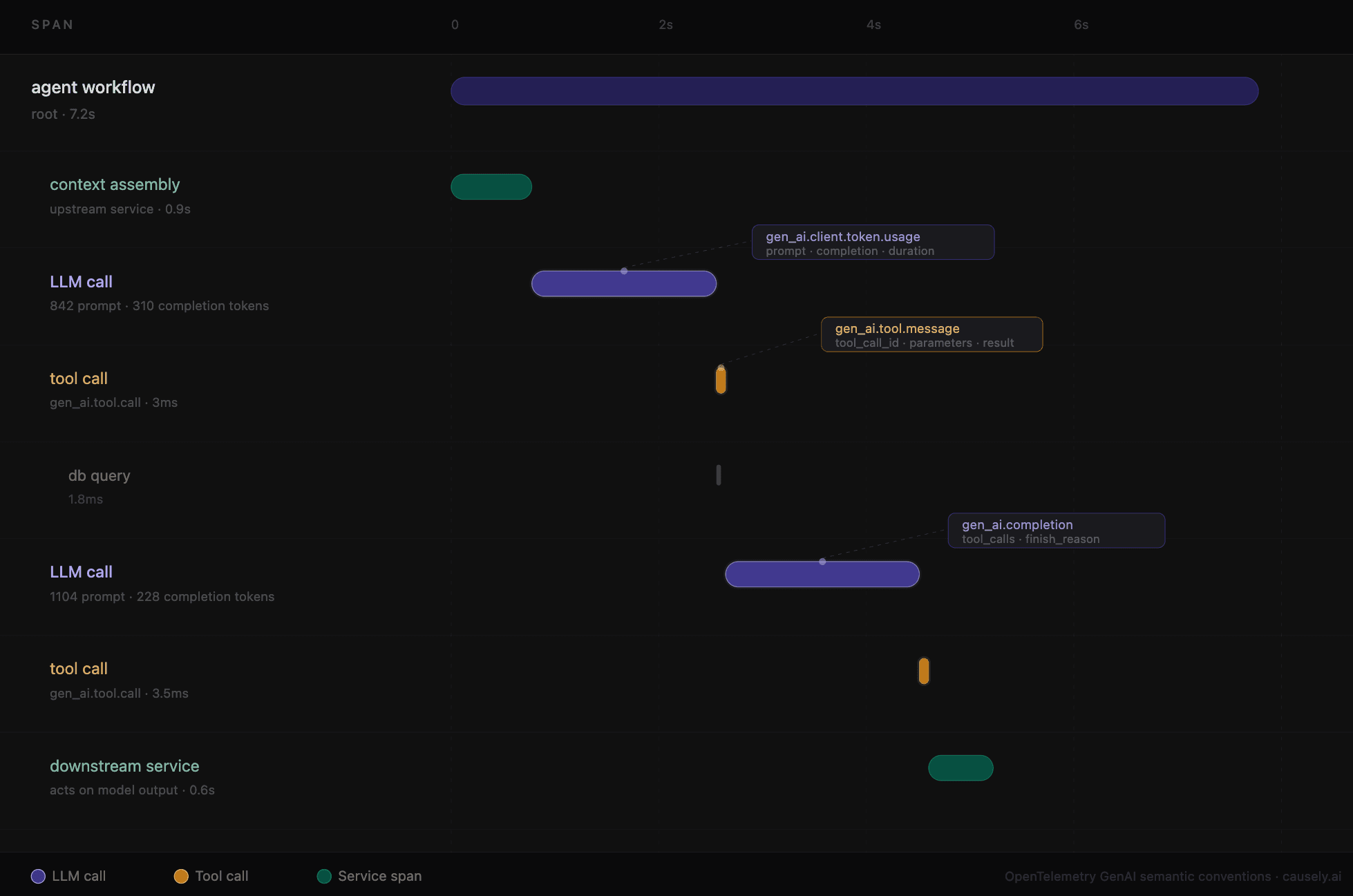
Standard observability tools were built for deterministic systems. GenAI applications break that contract — token counts shift, tool call patterns change, completion rates drop — and none of it fires an alert. Here is what OTel GenAI instrumentation gives you today, and where the gaps remain.
Endre Sara
May 27, 2026
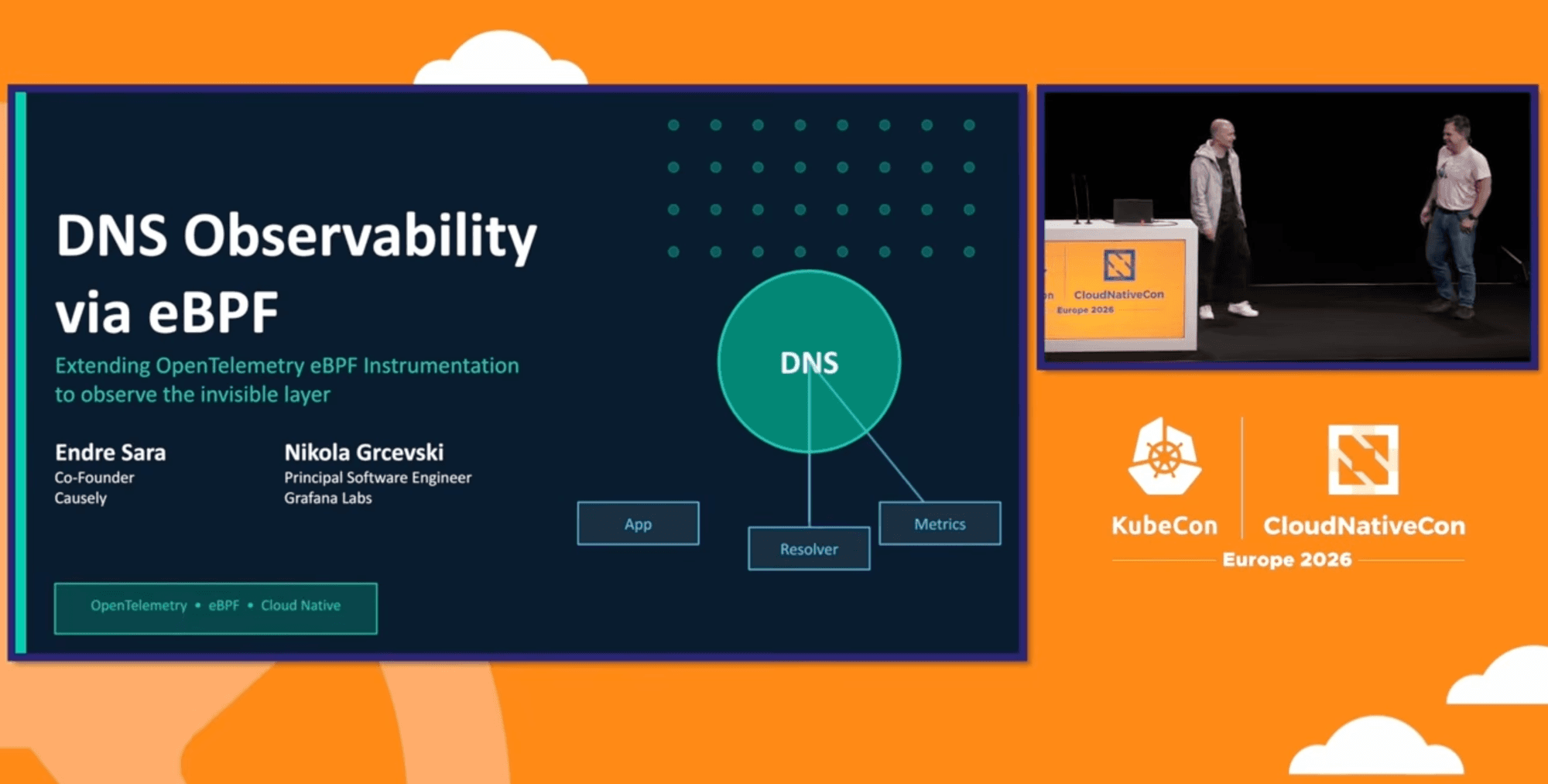
DNS lookup latency is invisible to standard OpenTelemetry instrumentation. eBPF-based tracing closes the gap, and it matters more as agents fan out calls across MCP servers.
Endre Sara
May 19, 2026
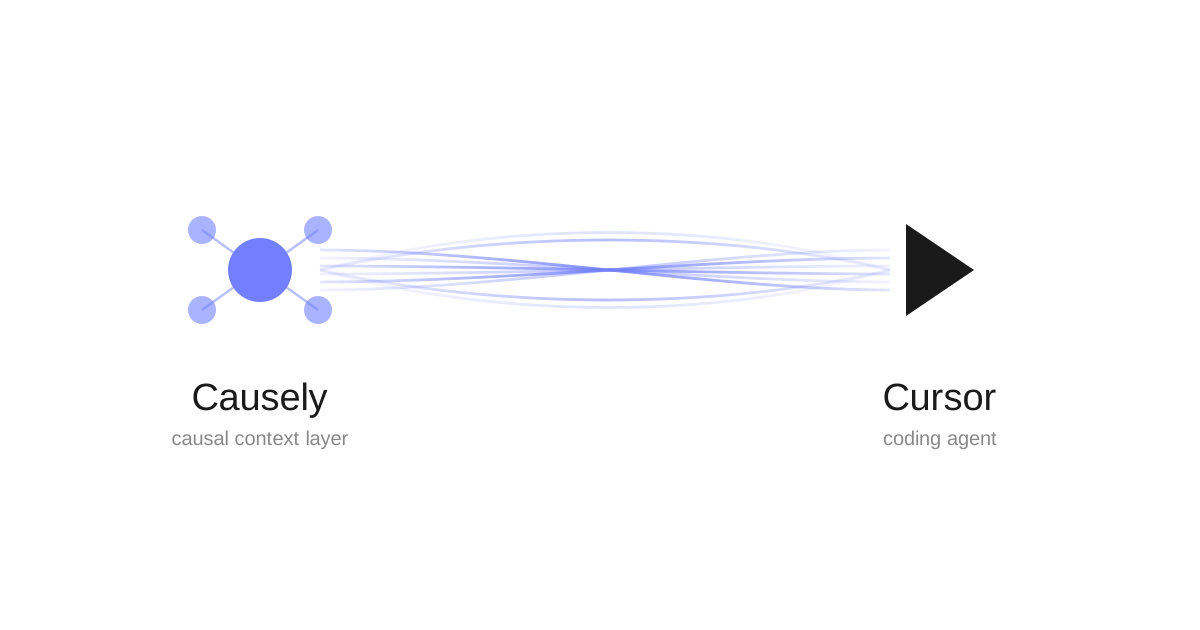
Causely is now a Cursor plugin. Your coding agent gets causal context from your live environment and can move from emerging causes of reliability risk to code-level fixes in the IDE.
Yotam Yemini
May 12, 2026
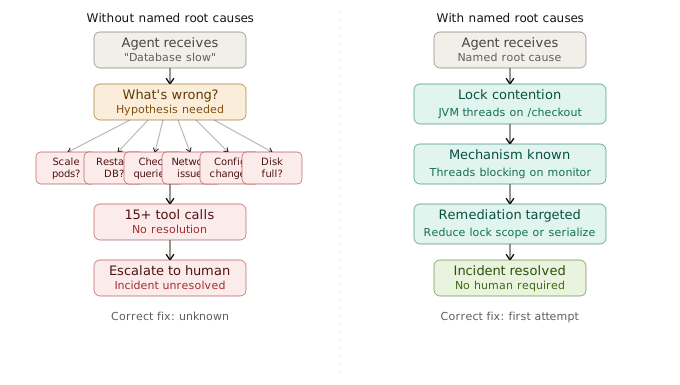
Named root causes are what turn a guessing agent into one you can trust to act without manual review.
Yotam Yemini
April 30, 2026
AI agents reconstruct environment state from raw telemetry on every reliability query. Causal context eliminates the reconstruction and cuts token use by 60%.
Ben Yemini
April 22, 2026
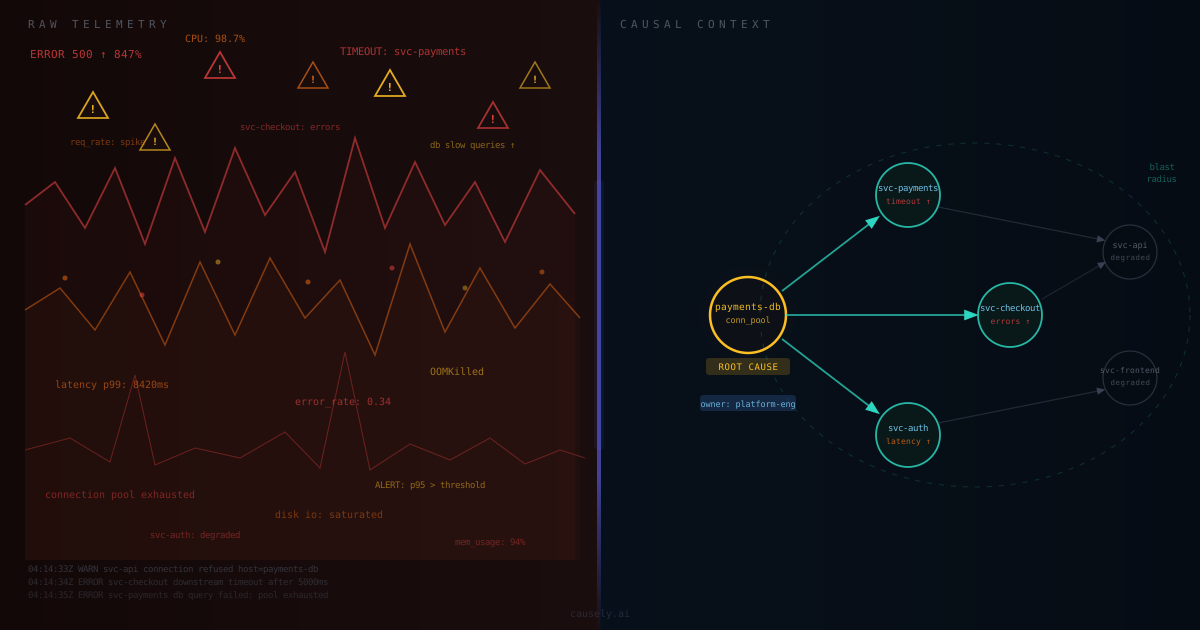
Most AI SRE agents are stuck on Read-Only — not because teams lack trust, but because raw telemetry offers no causal context to act on with confidence.
Yotam Yemini
April 14, 2026

Launching a new fintech product required certainty across a complex microservices platform. With Causely modeling cause-and-effect relationships across services, Humm Group gained system-level understanding and confidence that critical dependencies behaved correctly during launch.
Ben Yemini
March 12, 2026

Reliability is managed in services, but users experience outcomes. In complex, multi-service and AI-driven architectures, systems can look healthy in isolation while end-to-end workflows still fail. Product reliability needs visibility at the level of transactions and flows.

Severin Neumann
February 19, 2026
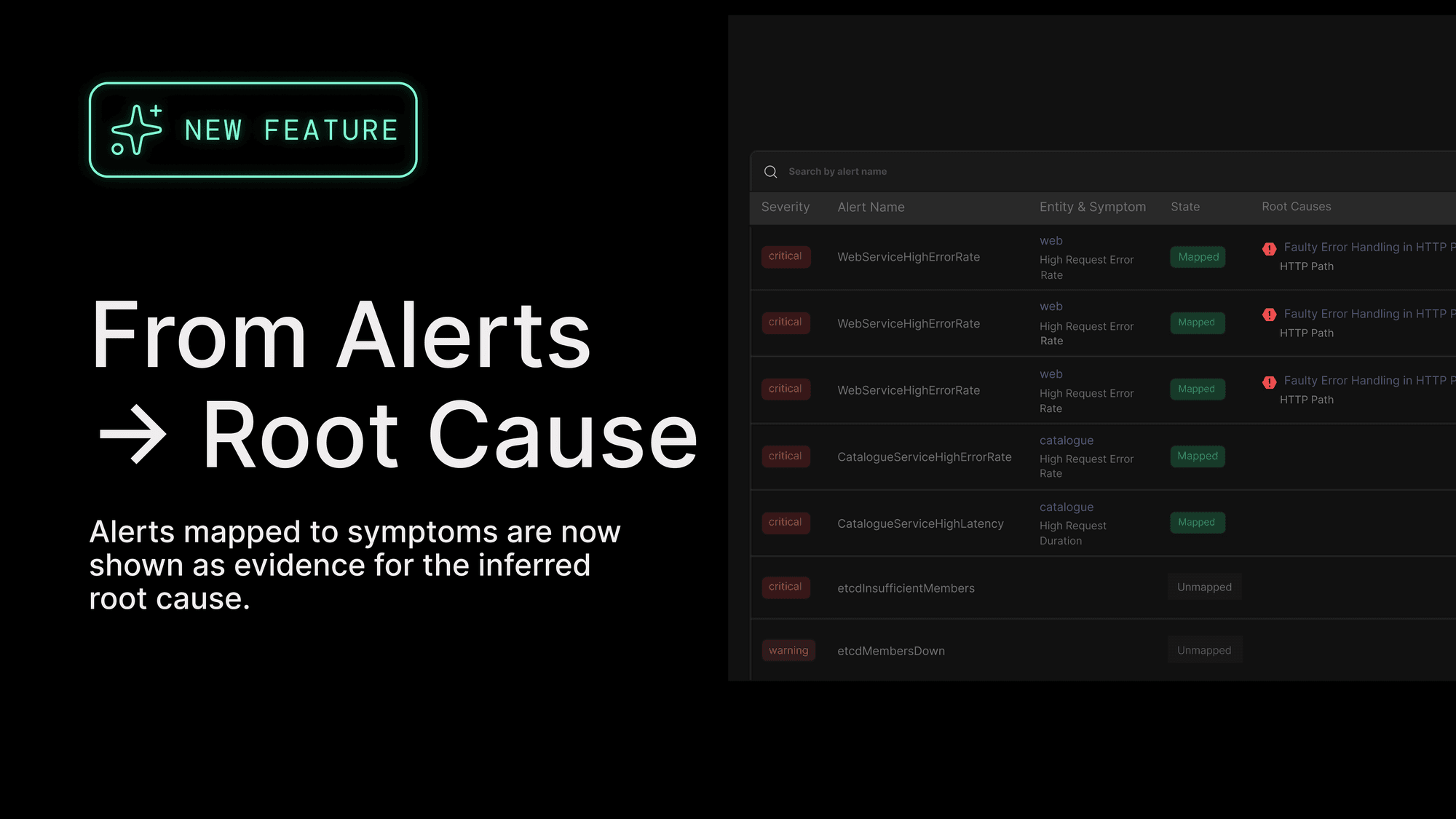
Alerts are signals, not explanations. By explicitly mapping alerts to symptoms and inferred root causes, Causely turns alert noise into a coherent explanation of what is actually happening in the system.
Ben Yemini
February 9, 2026
Slow SQL queries degrade UX and reliability. This guide shows how to distill OpenTelemetry DB spans into actionable metrics: build span-derived slow-query dashboards, rank queries by traffic impact, and detect regressions with anomaly baselines, so you fix what matters first. Hands-on lab included.
Severin Neumann
February 4, 2026
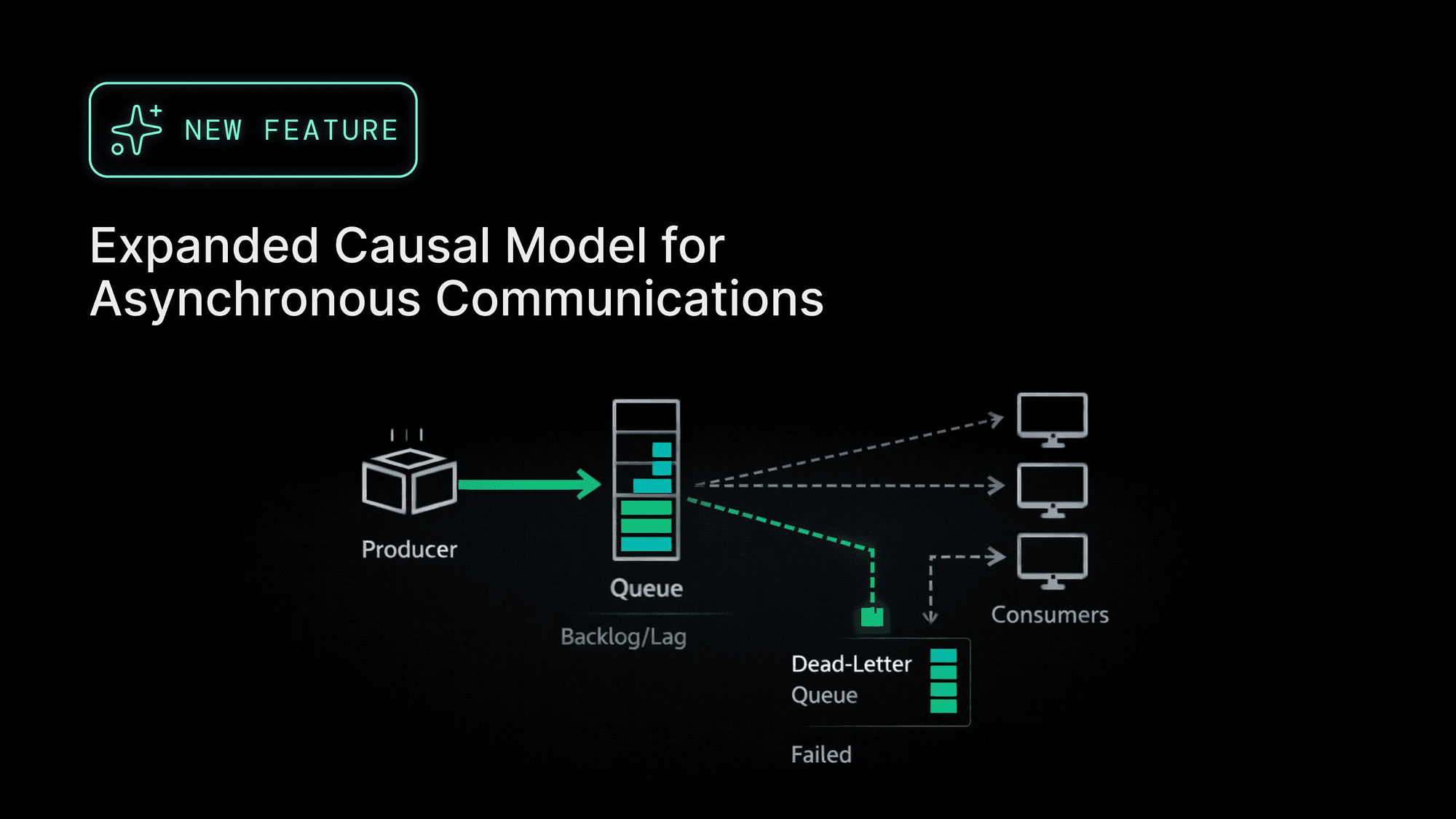
Causely’s causal model has been expanded for asynchronous messaging systems. Instead of treating queues as opaque buffers, Causely models messaging infrastructure as it operates in production, making asynchronous failures explicit and explainable.
Ben Yemini
January 28, 2026
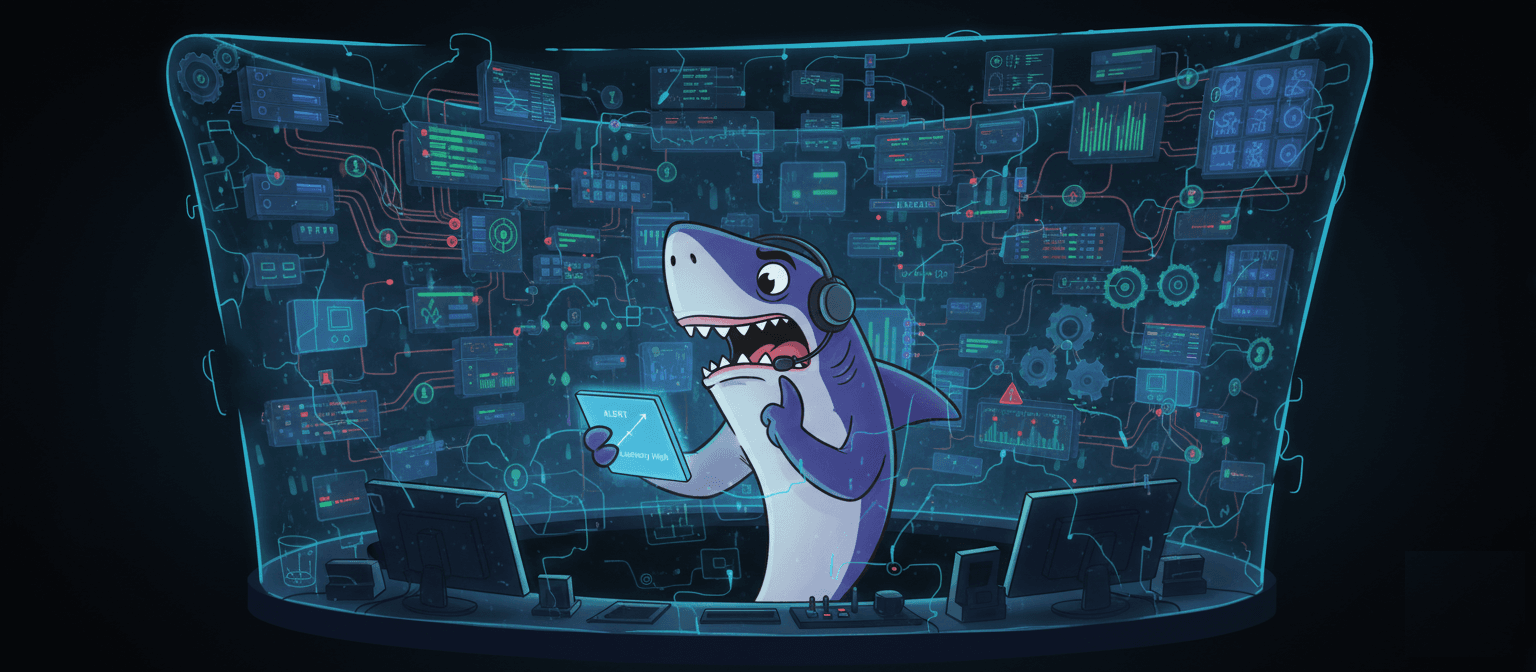
Alerts are supposed to start an investigation. Too often, they start translation: what is the system doing right now? That translation slows containment, splinters context, and stretches customer impact.
Severin Neumann
January 22, 2026
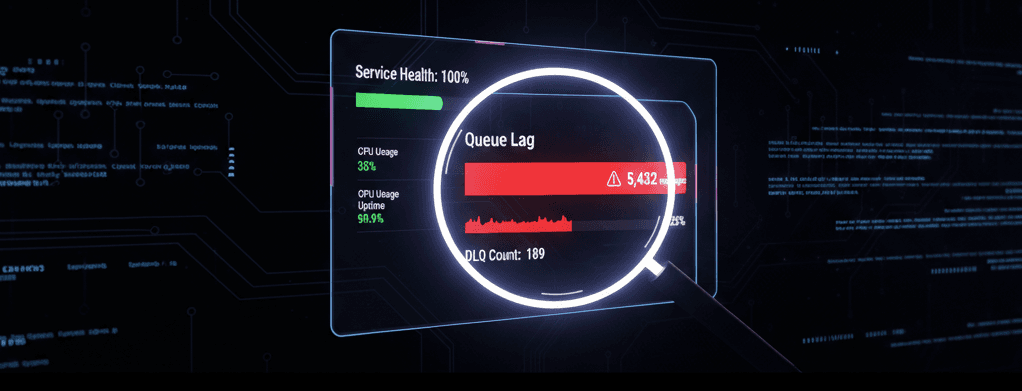
Asynchronous pipelines sit at the core of most modern systems. Message brokers accept traffic, consumers process it in the background, and downstream services depend on the results. When these systems fail, the failure rarely shows up where it starts.
Yotam Yemini
January 20, 2026
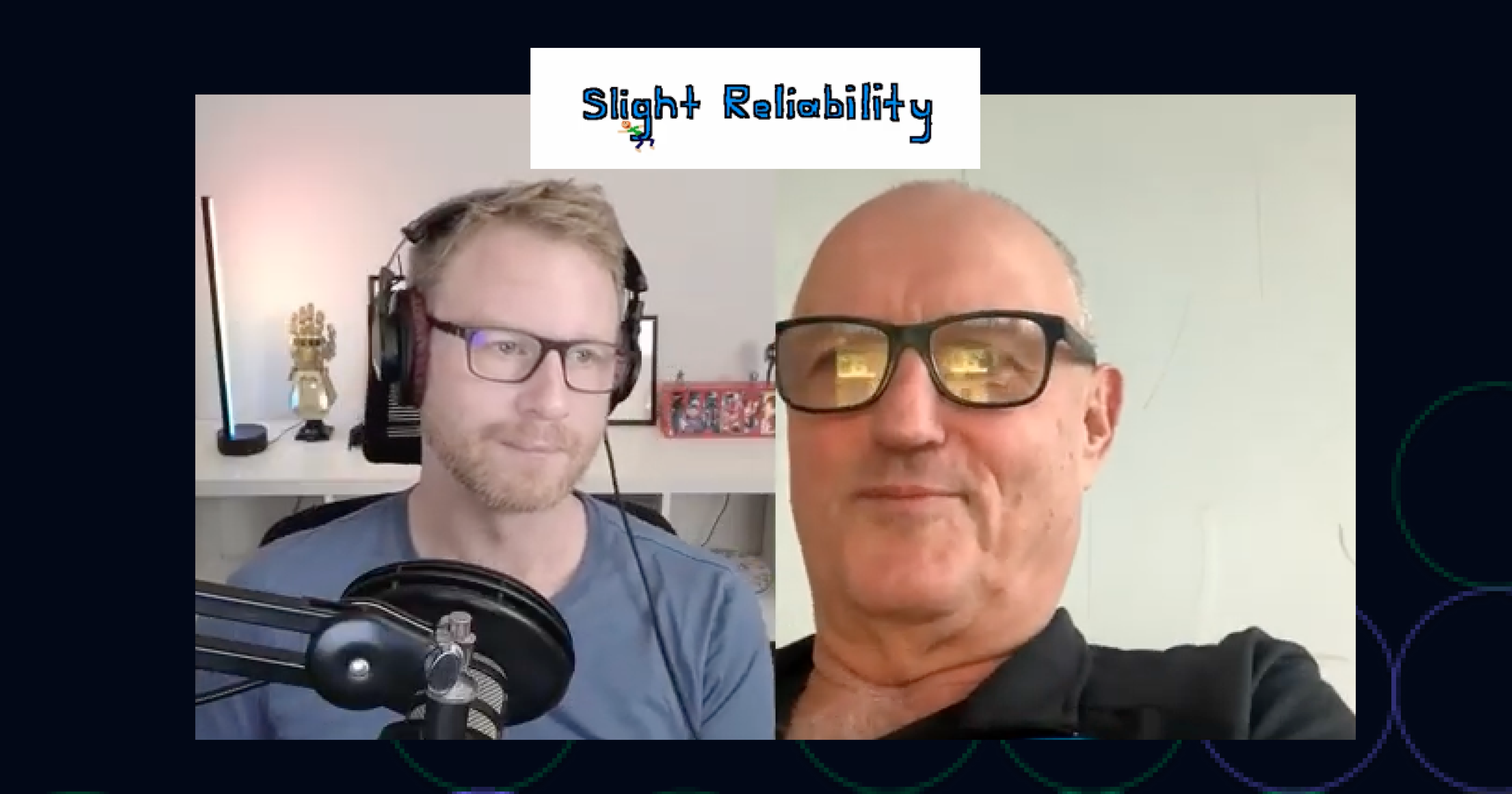
Originally published to the Slight Reliability Podcast.

Shmuel Kliger
January 12, 2026
Causely’s expanded Datadog integration turns Datadog APM signals into system-level causal intelligence, helping teams understand how issues propagate across services and pinpoint true root cause.
Ben Yemini
December 22, 2025
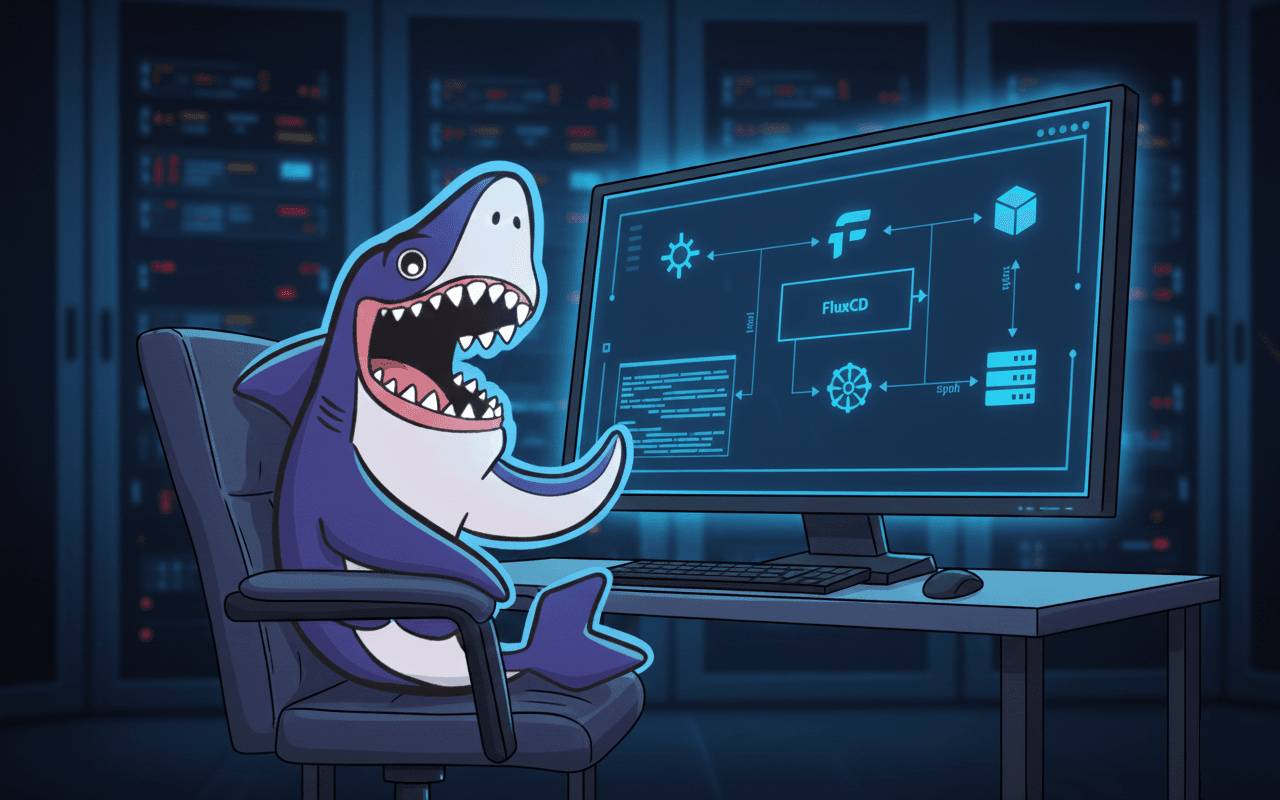
How Causely uses FluxCD and GitOps to ship weekly on Kubernetes, keep clusters in sync, and wire up OpenTelemetry and Causely in a hands-on lab you can copy.

Severin Neumann, Endre Sara, Thomas Kreeger
December 16, 2025
Gartner recognized Causely for maintaining a live causality graph and using continuous inference to identify the underlying driver behind changes in golden signals as they emerge, even when failures cascade across multiple services.
Yotam Yemini
December 9, 2025
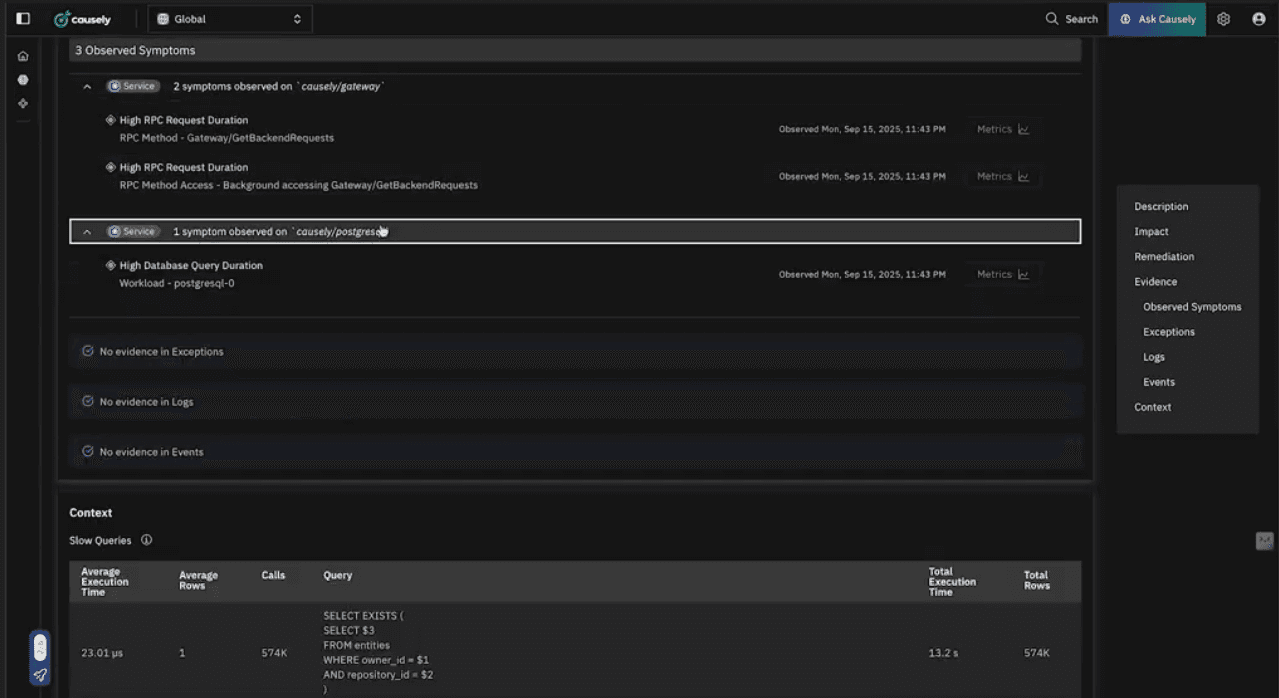
In a 50 to 100+ microservice environment with dense service-to-service dependencies, even small regressions can cascade silently. And slowing down isn’t an option. Leadership needs faster delivery and fewer incidents. This is why we built Reliability Delta.
Ben Yemini
December 4, 2025
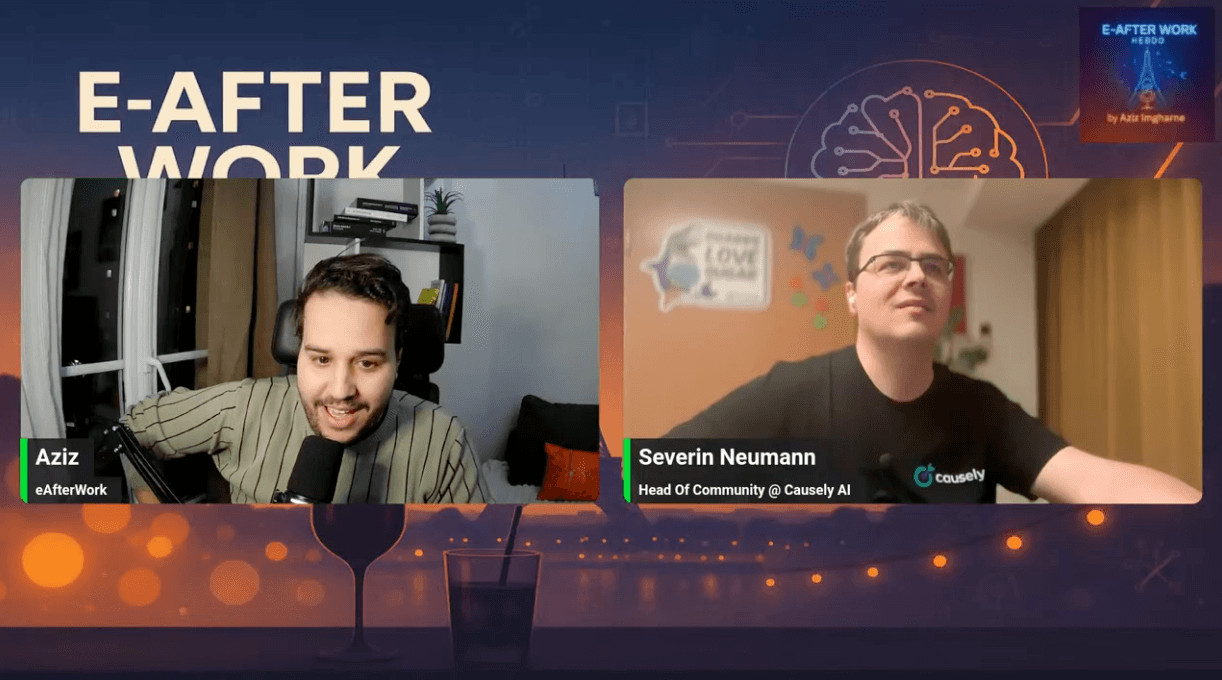
Originally published as a livestream to e-After Work.
Severin Neumann
December 3, 2025

Originally posted to Intellyx by Jason English.

Causely
December 1, 2025

Originally posted as a livestream from OllyGarden.
Severin Neumann
November 26, 2025

Originally posted to TFIR by Monika Chauhan. Causely’s Severin Neumann explains how causal reasoning, MCP, and AI-driven automation are transforming SRE workflows and Kubernetes reliability.
Causely
November 25, 2025

Originally posted to Techstrong.tv. Learn how Causely integrates reliability engineering into product development, tackling challenges in cloud-native applications.
Causely
November 17, 2025
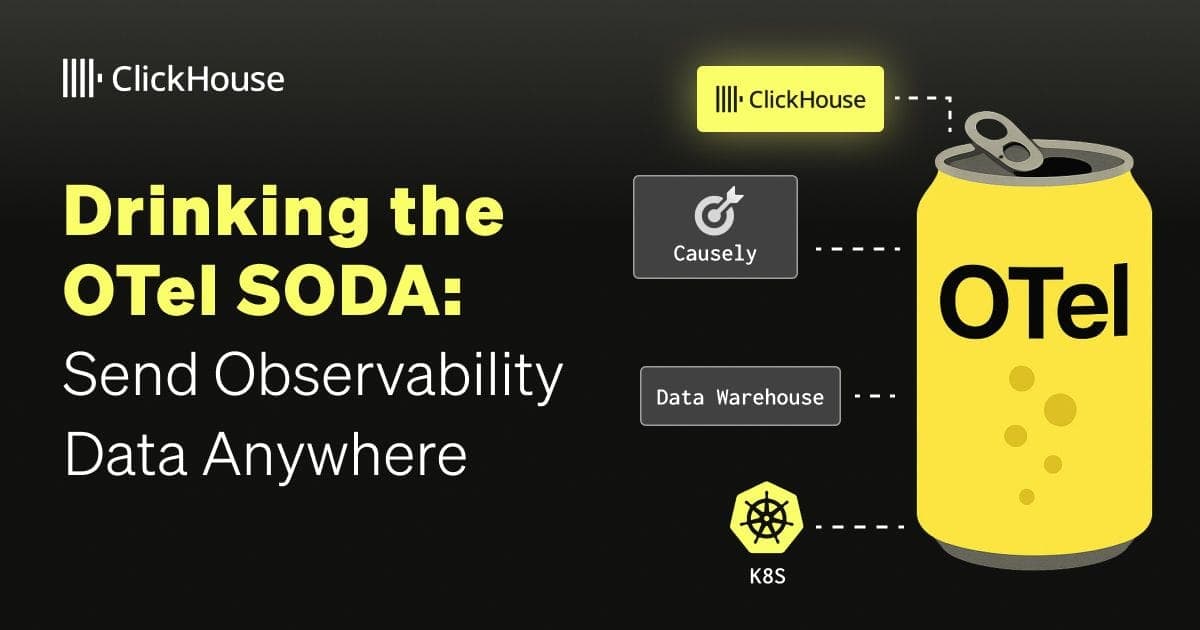
With community-standard instrumentation and the OTel Collector, your metrics, logs, and traces are no longer trapped in a walled garden. Originally posted to the ClickHouse blog.
Severin Neumann
November 17, 2025

Originally posted to International Business Times by David Thompson.
Causely
November 10, 2025
Learn why causal inference is the missing piece in AI-driven observability, and how Causely is the only AI SRE platform that uses causal reasoning to pinpoint where, what, and why application and system related issues occur.
Yotam Yemini
November 9, 2025

Originally posted to Cloud Native Now by Mike Vizard.
Causely
November 6, 2025

Reposted from its original publication on TechTimes by Carl Williams
Causely
November 6, 2025

Causely announced the launch of the Causely MCP Server that seamlessly integrates into any MCP-compatible IDE and enables developers to automatically diagnose, understand, and remediate complex issues within Kubernetes and application code using natural language prompts.
Causely
November 6, 2025
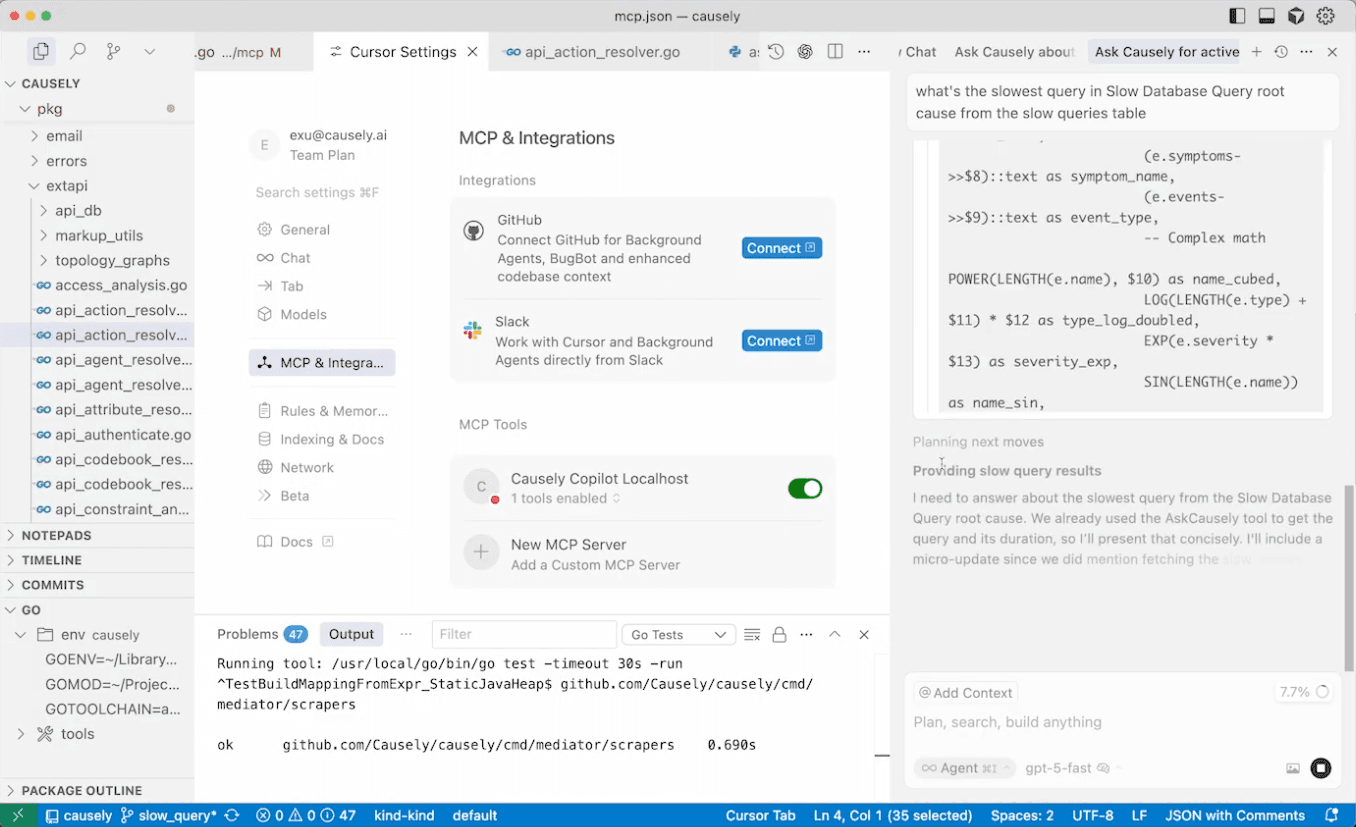
The Causely MCP Server brings our Causal Reasoning Engine directly into the IDE so engineers can understand why incidents happen and apply the right fix at the right layer, whether that’s runtime, configuration, or code.
Ben Yemini
November 5, 2025

Causely now leverages Google’s Gemini models to enhance how users interact with its Causal Reasoning Engine.
Causely
October 29, 2025
Gemini’s ability to interpret natural language, generate structured code, and summarize technical context complements Causely’s deterministic causal inference engine, turning complex telemetry into clear and reliable insights.

Steffen Geißinger
October 28, 2025

Modern CTO Podcast's Joel Beasley sits down with Causely CEO Yotam Yemini to dive deep into the world of AI Site Reliability Engineering.
Yotam Yemini
October 27, 2025

During a high-risk migration, Causely gave Quantum Metric a new kind of clarity rooted in cause-and-effect across dynamic systems. This helped them improve how they think about managing complexity at scale and move fast without breaking things.
Ben Yemini
October 27, 2025

Kubernetes has become the default backbone of cloud native architecture. But does it actually help you ship services more reliably, or is it just more moving parts?
Severin Neumann
October 27, 2025
Causely already mediates to OpenTelemetry, Datadog, and Dynatrace to consume traces, metrics, alerts and logs. Today we’re adding IBM Instana Observability to that list.
Severin Neumann
October 23, 2025
By open-sourcing eBPF-based auto-instrumentation and then donating it as an OpenTelemetry BPF Instrumentation (OBI) project, Grafana didn’t just release code, they lowered the onramp for observability.
Severin Neumann, Endre Sara
October 7, 2025

With Causely + Grafana, the gaming platform can spot reliability risks early, take the right action, and avoid revenue-impacting incidents before users even notice.
Ben Yemini
September 30, 2025
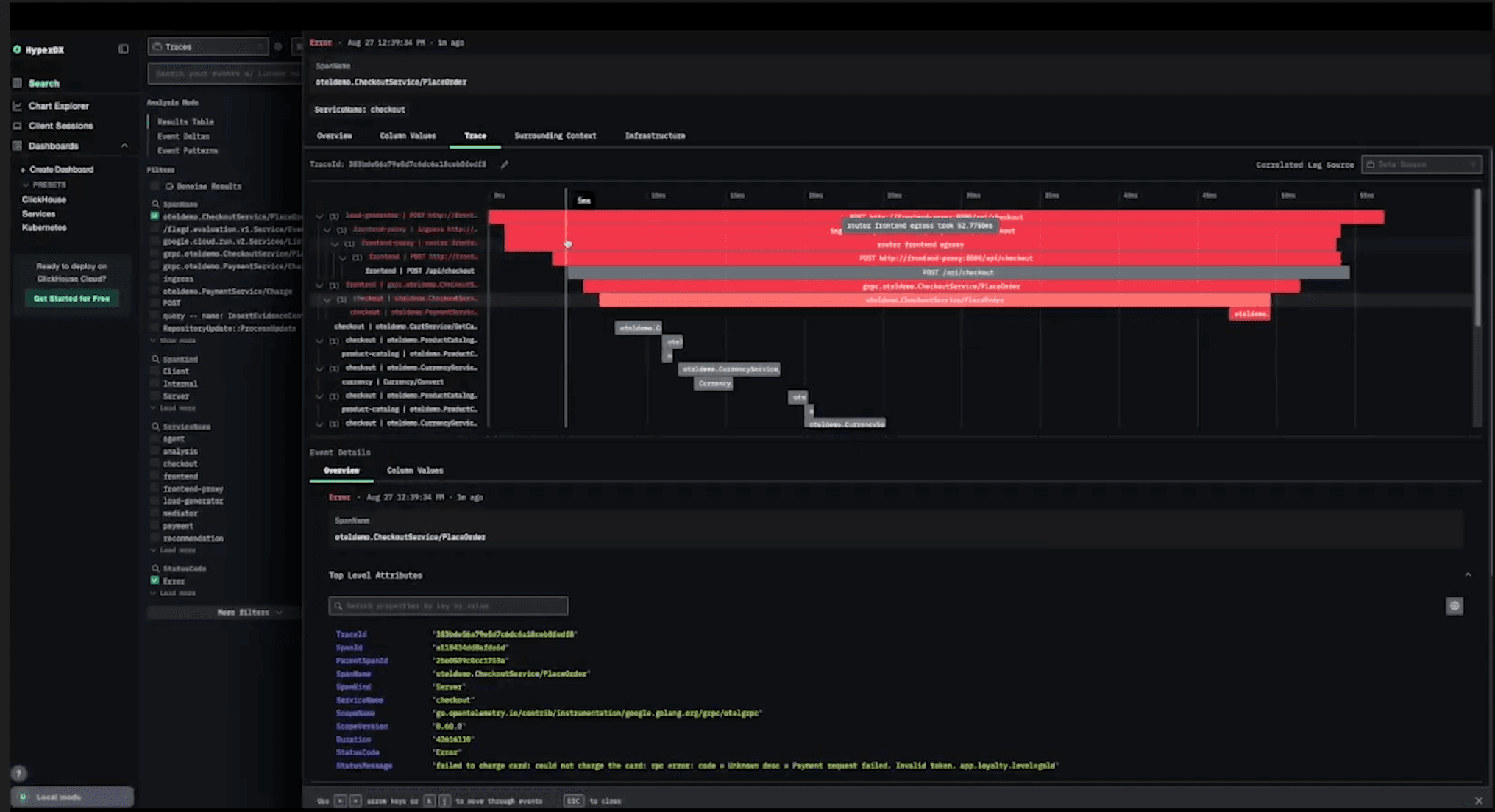
See how Causely and ClickStack by ClickHouse help teams fix failures confidently and address their real-world impact.
Severin Neumann
September 23, 2025
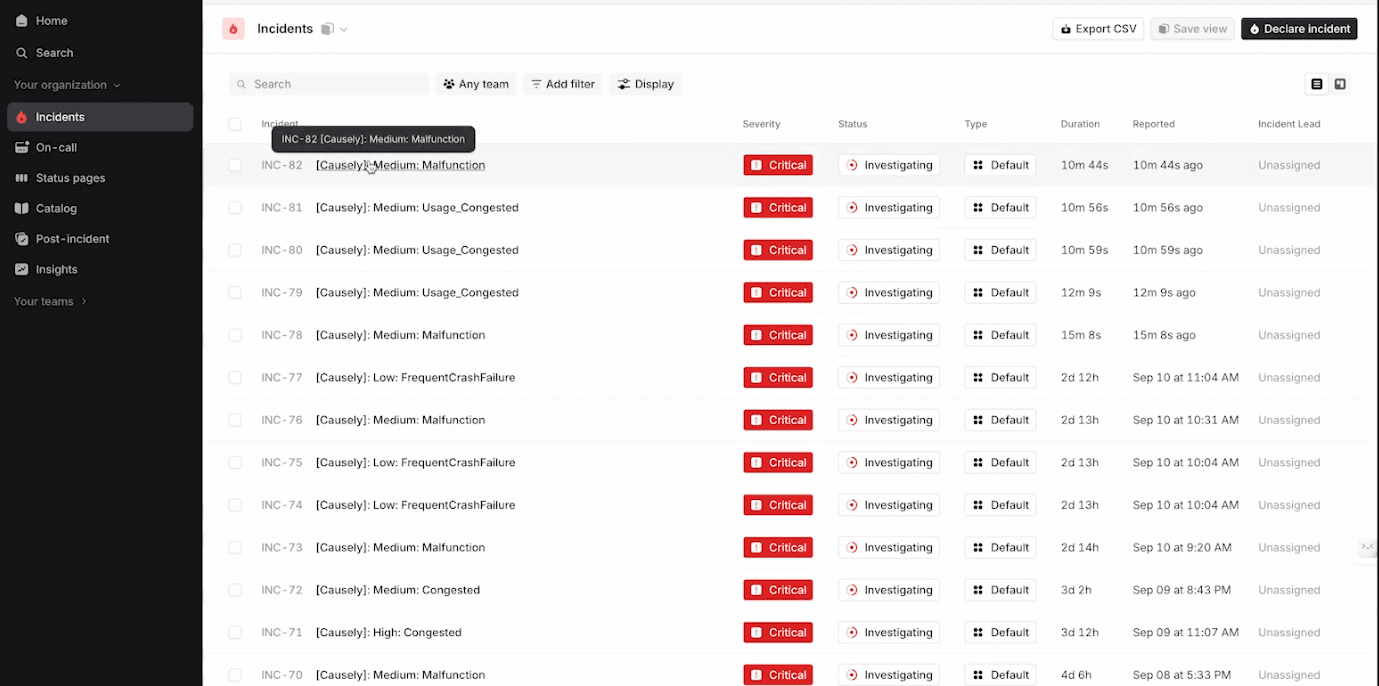
By combining Causely’s causal reasoning engine with incident.io’s powerful automation platform, engineering teams can identify the true root cause of incidents faster and respond with greater focus.
Anson McCook
September 22, 2025
By combining Causely’s causal reasoning engine with incident.io, engineering teams with complex microservices environments can go from incident to resolution much faster.
Ben Yemini
September 22, 2025

Confusing SRE, DevOps, and Platform Engineering may work at 20 engineers, but at 200 it creates chaos. Here’s why the distinctions matter and how to scale them effectively.
Yotam Yemini
September 18, 2025

Whether we call it APM or observability is bikeshedding. What really matters is ensuring systems deliver the service levels users expect. That’s where AI comes in.
Severin Neumann
September 17, 2025

Microservices do not automatically deliver fault isolation by design. They replace one obvious forest fire with a sprawling network of subtle, cascading brush fires.
Yotam Yemini
September 10, 2025
Severin shares insights into his career path, including his involvement with AppDynamics and Cisco, and his current role at Causely, where he focuses on OpenTelemetry and causal reasoning for root cause analysis.
Severin Neumann
September 10, 2025

This article has been reposted with permission from CIO Dive.
Yotam Yemini
September 8, 2025
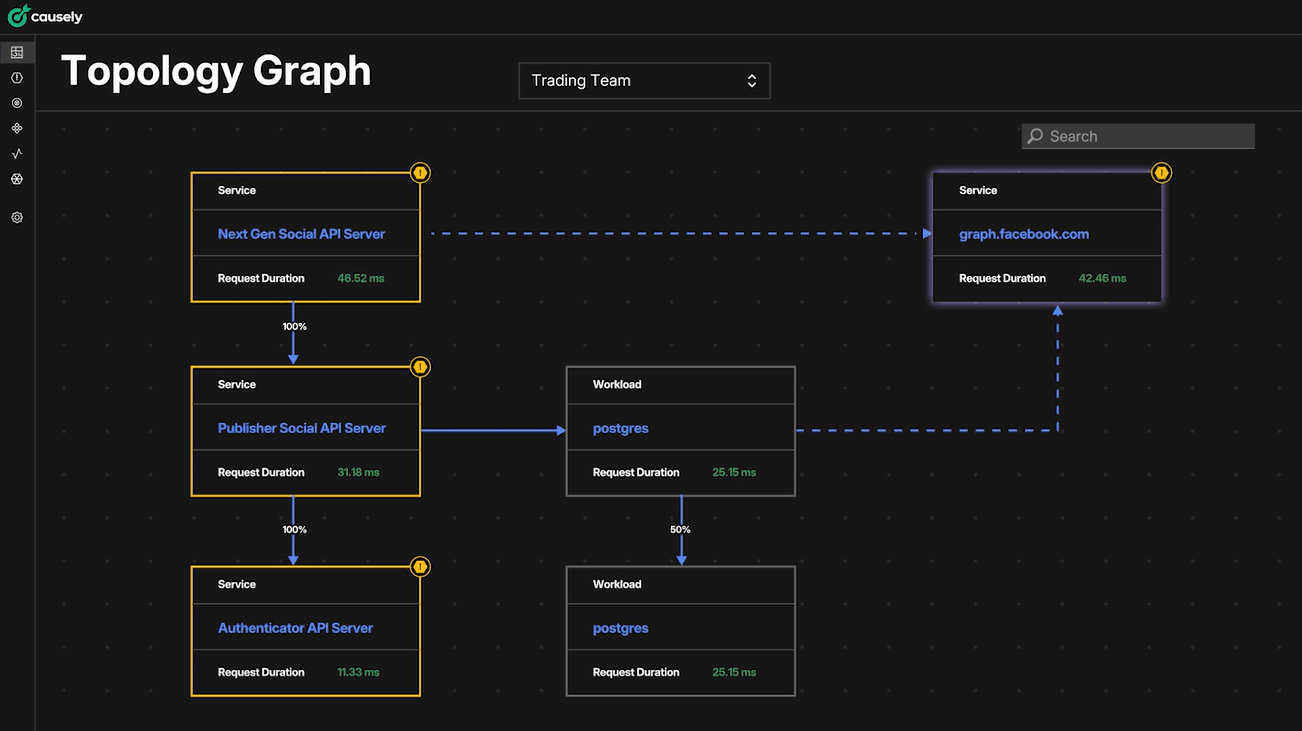
When a provider slows down, Causely shows exactly how the impact ripples across your services and identifies the external API as the root cause.
Anson McCook
September 3, 2025

Causal reasoning with AI agents enable proactive incident prevention, automated remediation, and a path toward autonomous service reliability.

Dhairya Dalal
September 2, 2025

We’ll recap OTel logging best practices, explore how to use logs effectively in troubleshooting without drowning in data, walk through a tutorial workflow you can apply today, and show how Causely operationalizes this approach automatically at scale.
Ben Yemini
August 28, 2025

This post explores four architecture patterns where standalone Docker is not only justified but recommended.
Ben Yemini
August 15, 2025
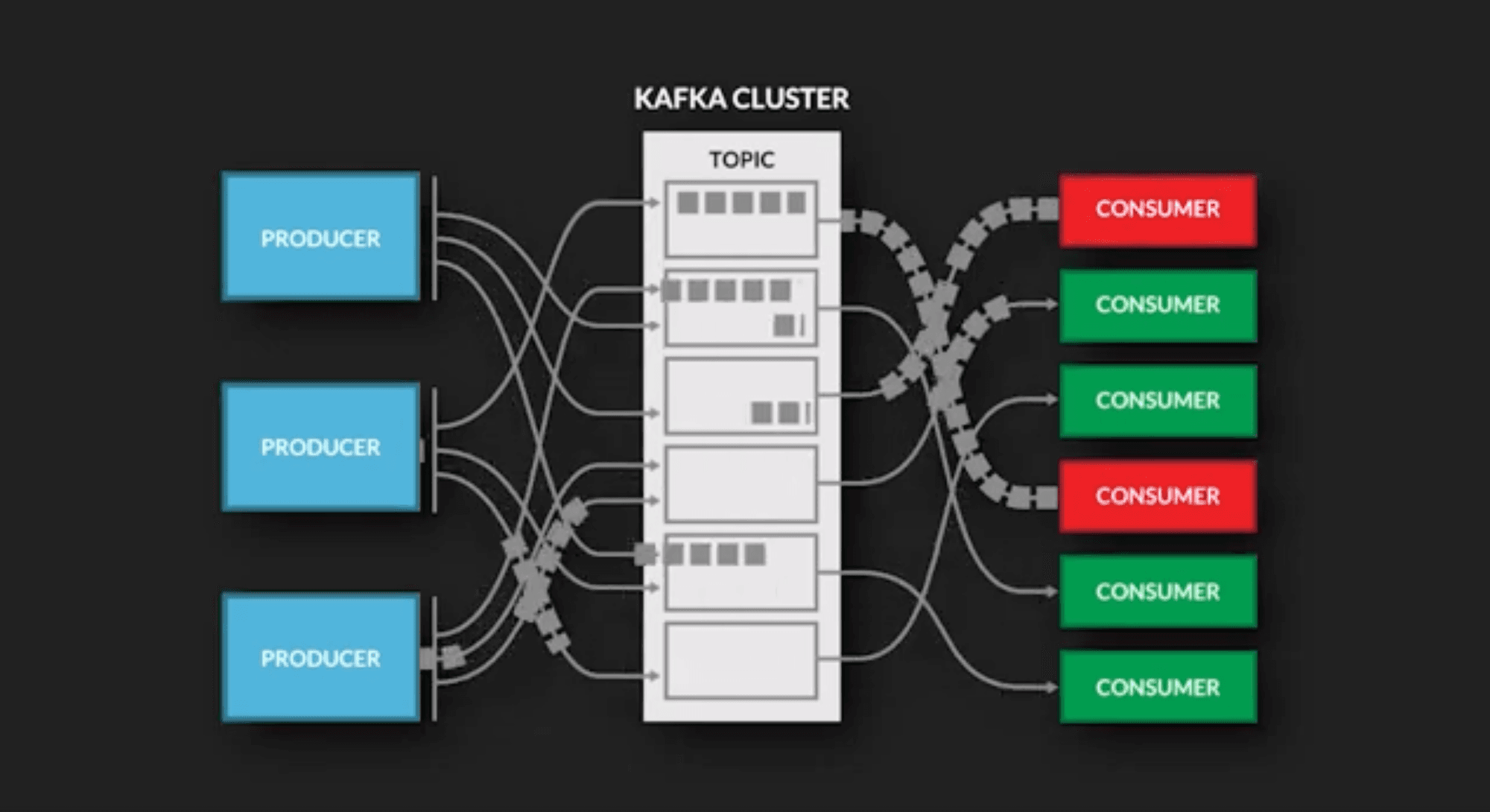
Watch the video to see how Causely turns “Lag High” chaos into confident, informed action in seconds.
Anson McCook
August 12, 2025

Most developers use automatic instrumentation without knowing how it actually works. This post breaks down the key techniques behind it—not to build your own, but to understand what’s really happening when things "just work."
Severin Neumann
August 7, 2025
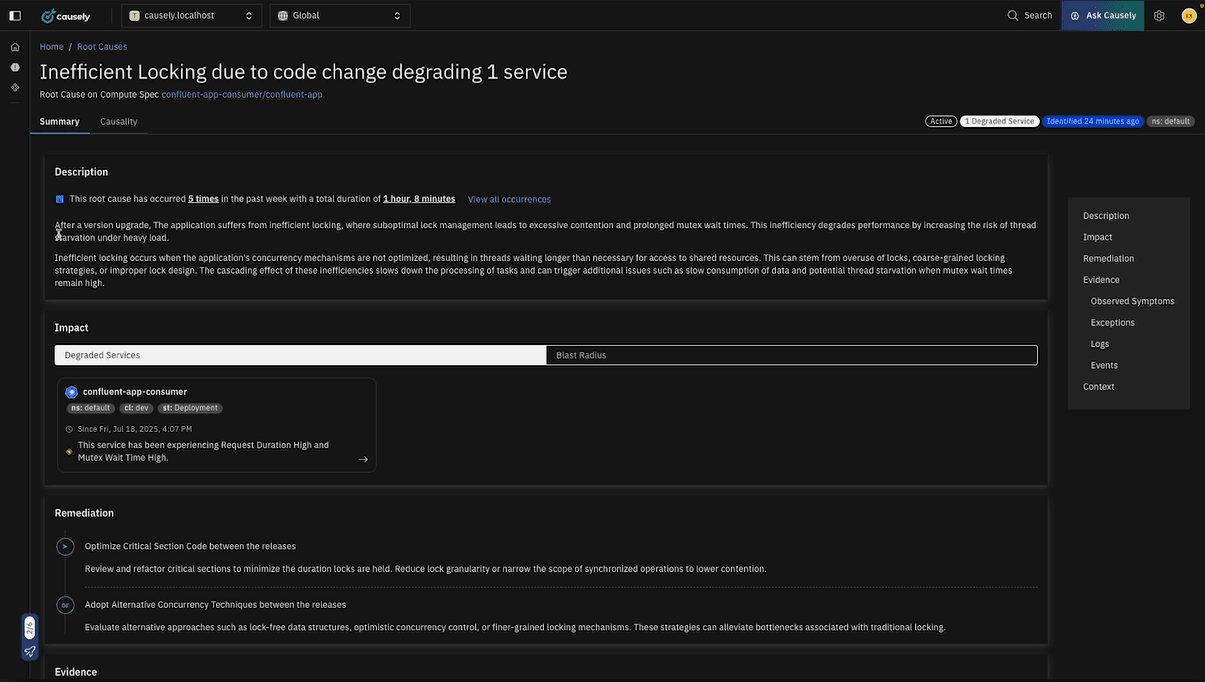
In this short video, we show how Causely pinpoints the exact code change that triggered cascading performance issues — without requiring you to sift through logs or build custom dashboards.
Anson McCook
July 25, 2025
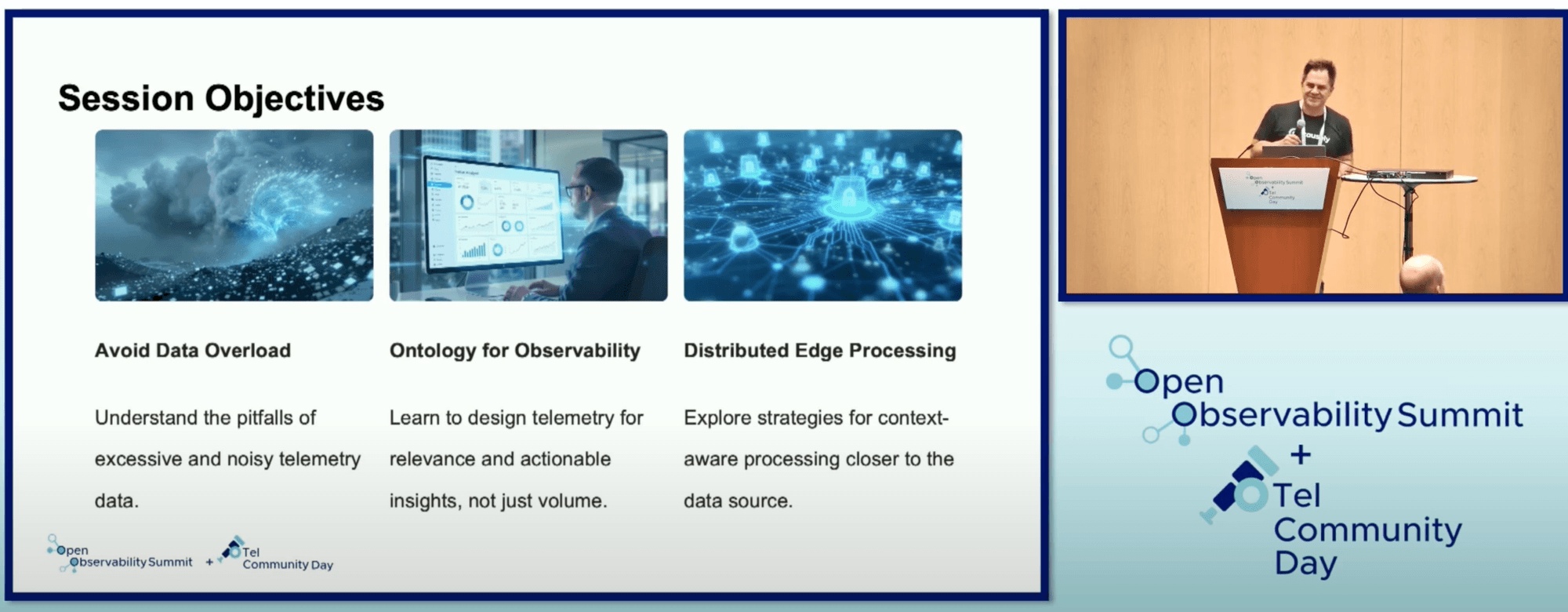
More telemetry doesn’t guarantee more understanding. In many cases, it gives you the illusion of control while silently eroding your ability to reason about the system.

Endre Sara, Akhand Singh
July 22, 2025
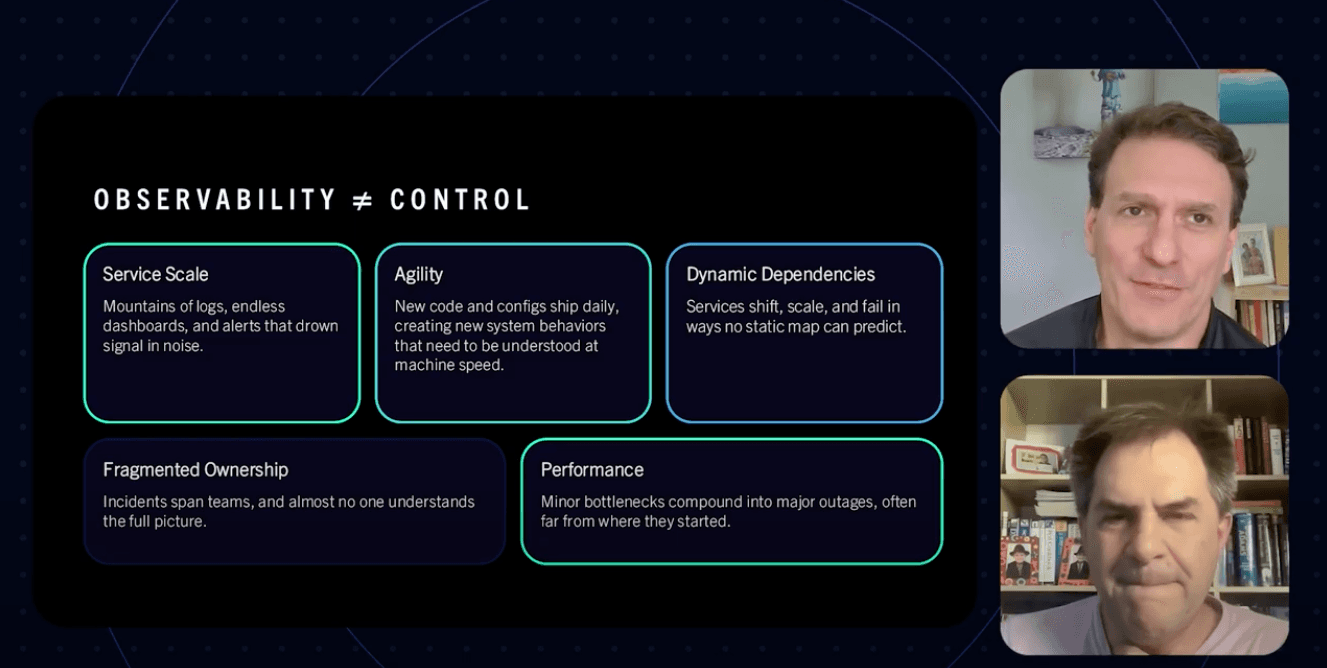
In 'Rethinking Reliability for Distributed Systems,' Endre Sara shared a common story: a large-scale customer, running mature microservices in Kubernetes with full observability coverage, still struggles to understand what’s broken during a high-stakes business event.
Ben Yemini
July 14, 2025
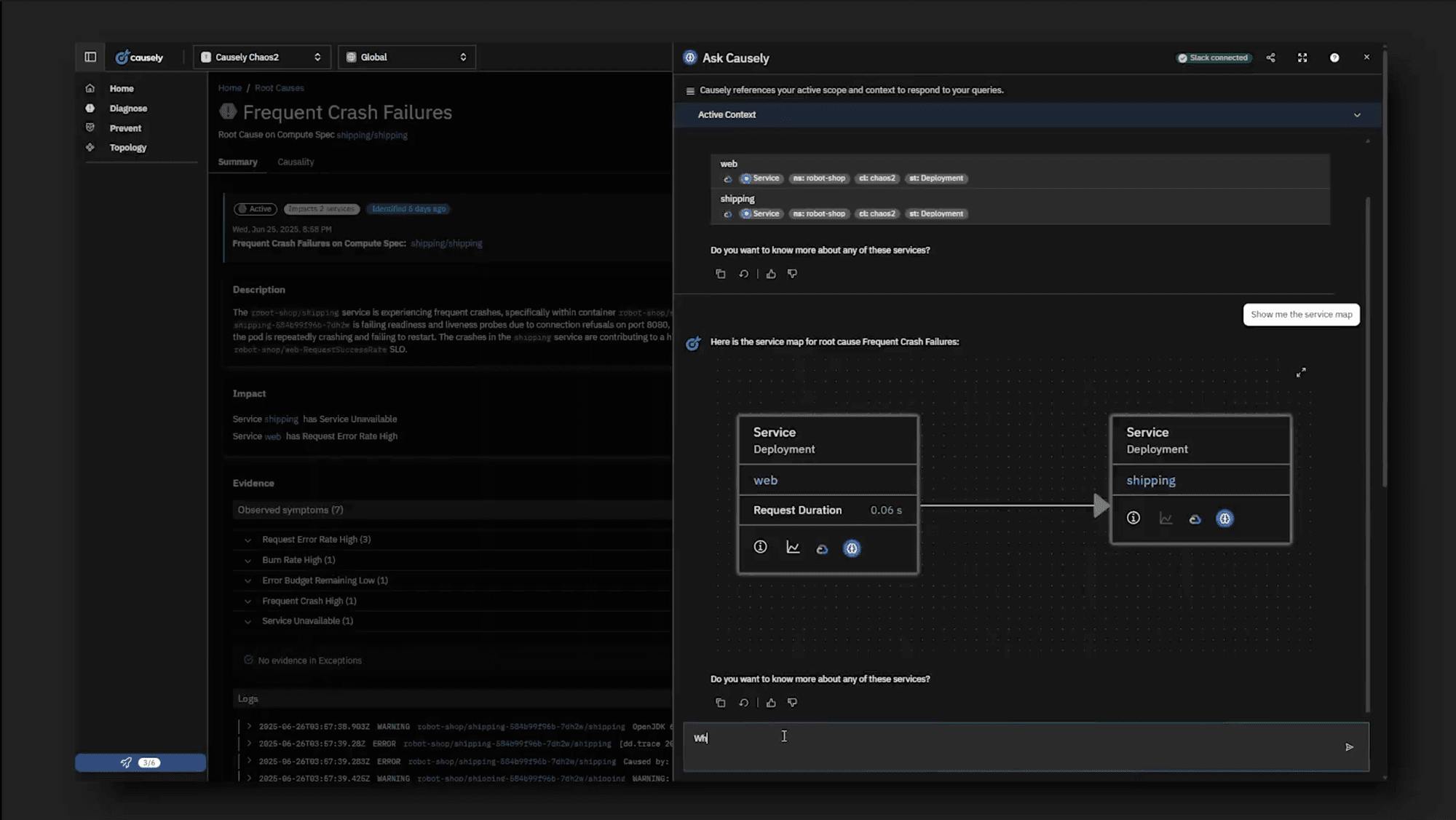
In this short demo, we show how Ask Causely shifts incident response from a fire drill to a focused, high-context workflow.
Anson McCook
July 10, 2025
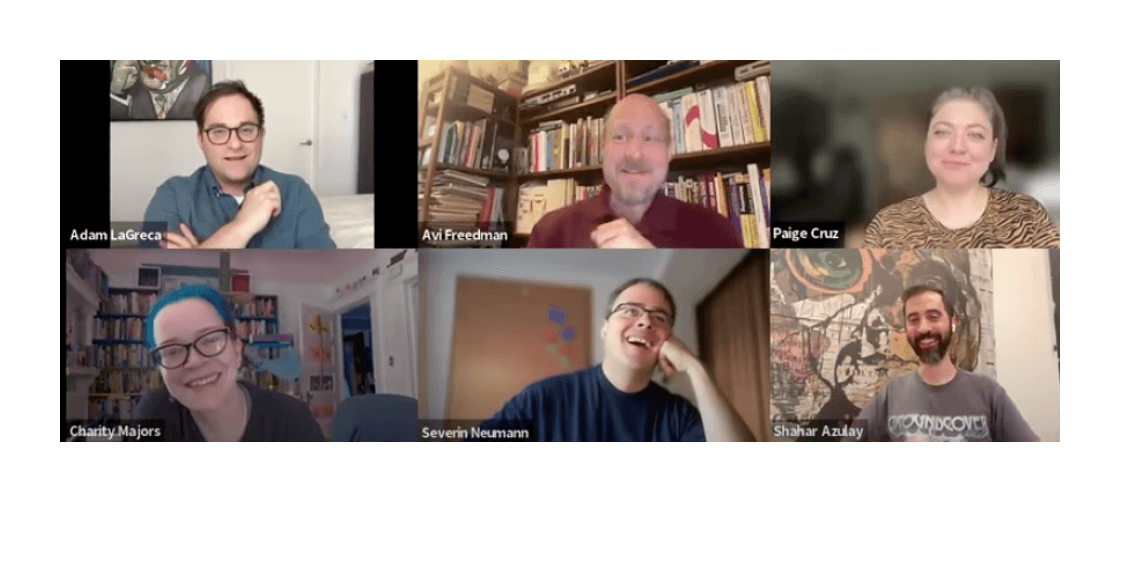
A few weeks back, I joined Charity Majors, Paige Cruz, Avi Freedman, Shahar Azulay, and Adam LaGreca for a roundtable on the state of modern observability. It was an honest conversation about where we are, what’s broken, and where things are heading. You can read the full summary on The New Stack. This exchange inspired me to write down my thoughts and to expand on them. Let’s Not Rename Observability — Let’s Make It Work Every few months, a new term pops up: understandability, explainabili
Severin Neumann
July 3, 2025
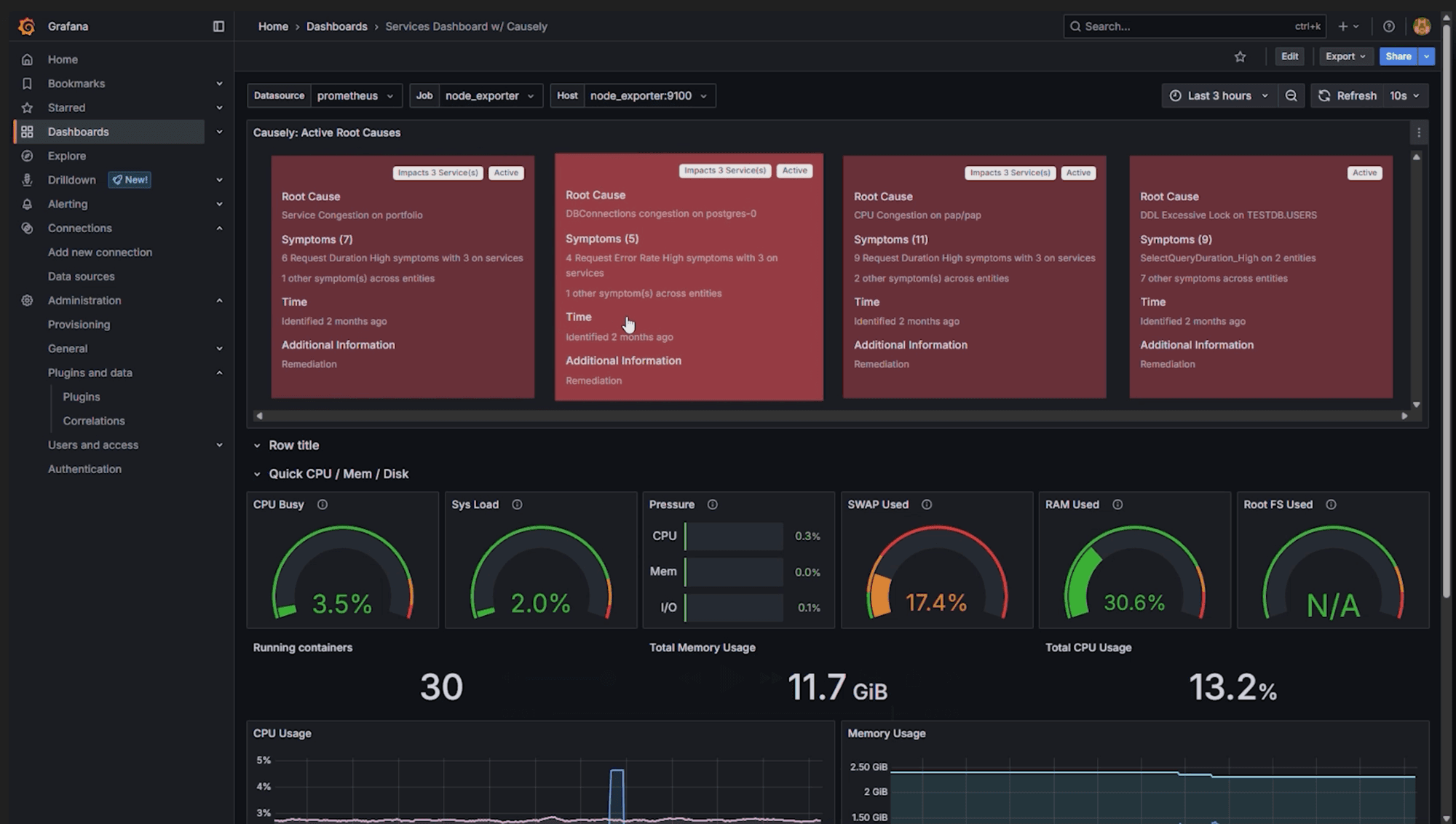
Grafana gives teams the power to visualize everything - but on Day 0, when your dashboards are live and alerts start firing, what your team really needs is clarity. That’s why we built the new Causely plugin for Grafana. In just minutes, Causely connects to your telemetry sources and begins surfacing the root cause of performance degradations - right inside your existing dashboards. No code changes. No sidecars. Just answers. In this video, you’ll see how Causely helps teams cut thro
Anson McCook
June 27, 2025

“Root Cause Analysis” (RCA) is one of the most overloaded terms in modern engineering. Some call a tagged log line RCA. Others label time-series correlation dashboards or AI-generated summaries as RCA. Some reduce noise by filtering or hiding secondary and cascading alarms. And recently large language models (LLMs) have entered the scene, offering natural-language explanations for whatever just broke. But here is the problem: none of these are actually solving the Root Cause Analysis problem.
Dhairya Dalal
June 2, 2025

When it comes to observability and IT operations, our goal should be to get humans out of the loop as much as possible.
Shmuel Kliger
May 16, 2025
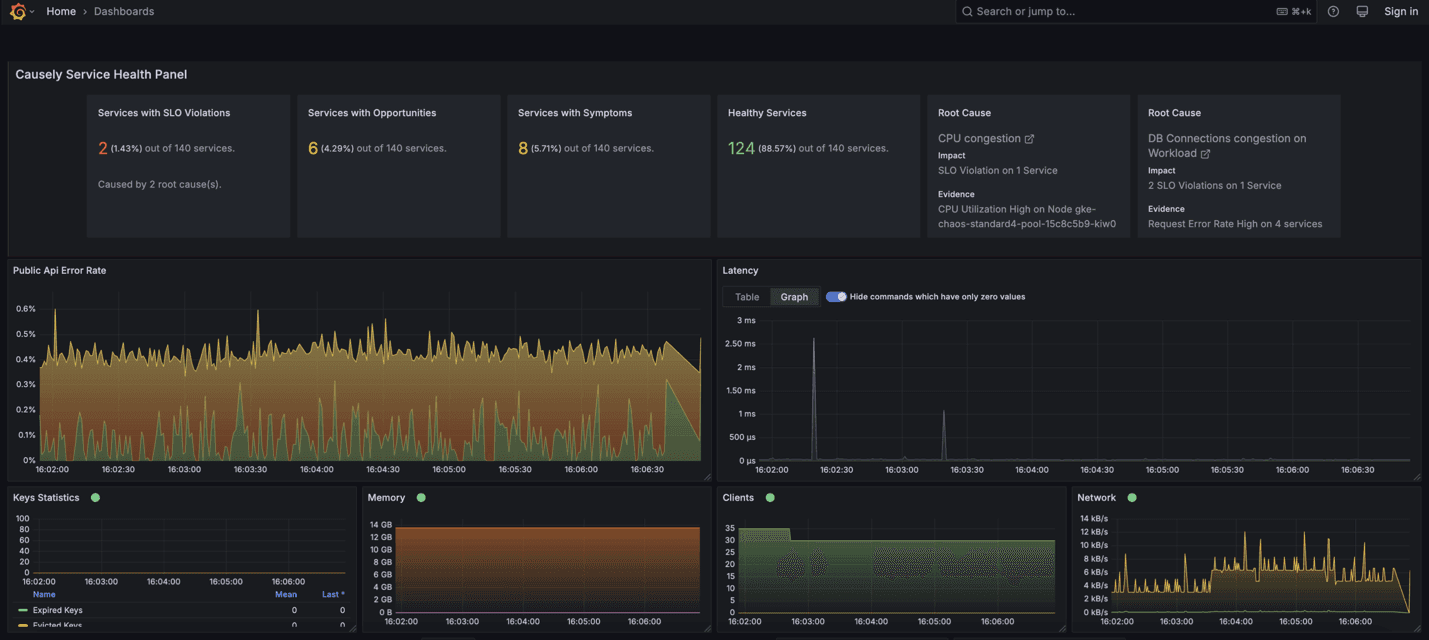
With Causely, you can see the why behind what’s happening without having to leave your Grafana interface.
Endre Sara
May 6, 2025
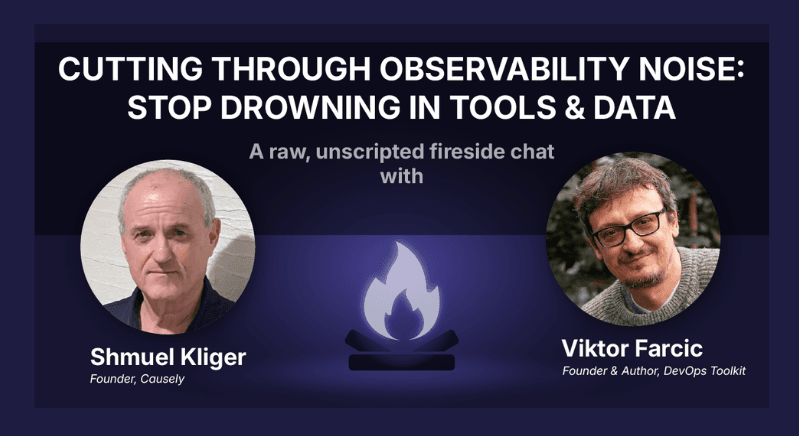
“You actually cannot do meaningful reasoning especially when it comes to root cause analysis with LLMs or machine learning alone. You need more than that.” -Shmuel Kliger, Founder of Causely
Causely
May 5, 2025

A version upgrade. A schema change. And suddenly, a critical service stalls. MySQL 8’s hidden metadata locking behavior has tripped up even the most prepared teams. We captured this knowledge — and now, Causely can pinpoint it. If you’ve learned about how Causely works, you already know that our Causal Reasoning Platform includes a built-in causal knowledge base. This knowledge base guides system behavior by capturing the potential root causes in your environment and the symptoms they may cause
Enlin Xu
May 2, 2025
Assuring service reliability is the most critical goal of IT. It was never easy, and it is getting increasingly complex as businesses require greater speed, agility, and scalability to stay competitive and respond quickly to changing market demands. These needs are driving the adoption of microservices architectures, enabling organizations to build and deploy applications with increased flexibility, resilience, and efficiency at scale. But there are no free lunches -this adoption comes with a
Endre Sara
April 22, 2025

At Causely, we don’t just ship software – we run a reasoning platform designed to detect, diagnose, and resolve failure conditions with minimal human intervention. Our own cloud-native application runs in a highly distributed environment, with dozens of interdependent microservices communicating in real-time. It’s complex, dynamic, and constantly evolving—just like the environments our customers run. Recently, we encountered an issue that perfectly illustrates the value of Causely’s Causal Rea

Christine Miller
April 17, 2025
Implementing OpenTelemetry at the core of our observability strategy for Causely’s SaaS product was a natural decision. This post shares context on our rationale and how the combination of OpenTelemetry and causal reasoning underpin our platform.
Endre Sara
March 25, 2025

In this DevOps Toolkit episode, Endre Sara joins Viktor Farcic for an Ask Me Anything session.
Endre Sara
March 20, 2025
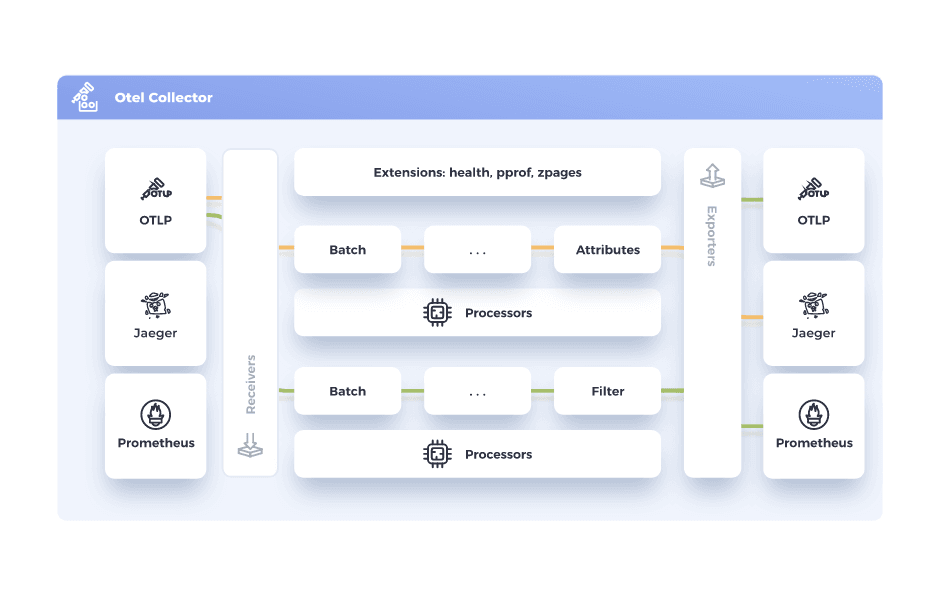
This production-focused guide offers an understanding of what OpenTelemetry is, its core components, and a detailed look at the OTel Collector.
Causely
March 13, 2025

Shmuel talks with Techstrong.tv's Alan Shimel about Causely launching its integration with OpenTelemetry, which has redefined observability by standardizing how telemetry data is collected and processed.
Causely
March 5, 2025

Causely is a new player on the observability scene. The main problem their platform addresses is that modern teams are drowning in too many alerts and too much data coming from multiple observability solutions across open-source and 3rd party vendors.
Causely
March 5, 2025

Causely is announcing its integration with OpenTelemetry, bringing a fresh approach to observability that cuts through the noise and surfaces only what matters.
Causely
March 5, 2025
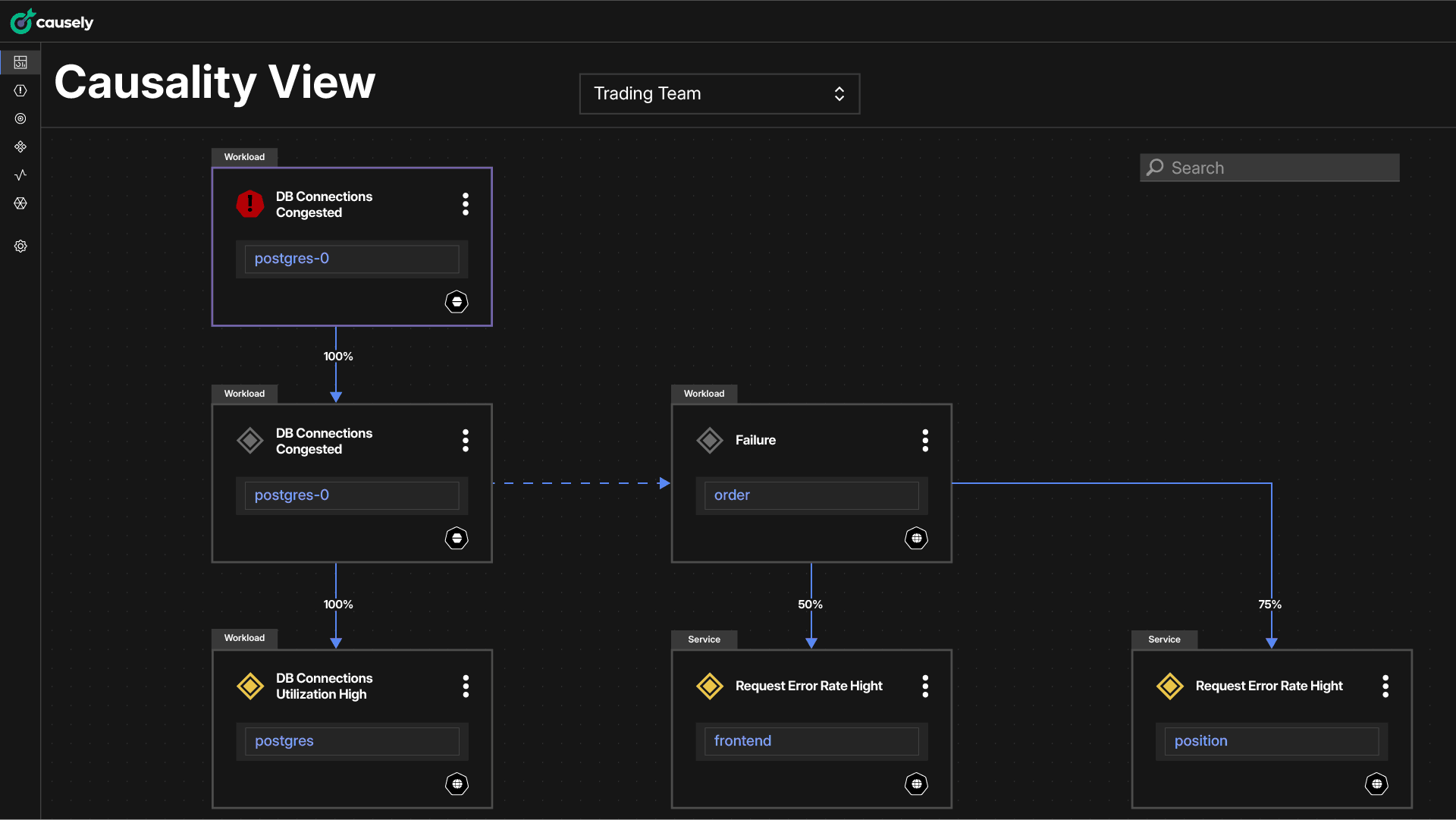
View the original article on CIODive. I’ve spent over three decades in IT Operations. Despite all the talk of transformation, many of the fundamental challenges remain unchanged, or have even worsened. The rise of modern DevOps and observability promised to revolutionize how we monitor and maintain systems, but in reality, we’ve simply scaled up the same old problems. More data, more dashboards, and more alerts haven’t led to better outcomes. The core issue? Our approach to observability ha
Shmuel Kliger
March 5, 2025

In this 10KMedia Podcast interview, Adam sits down with Shmuel to discuss the problems with traditional observability, the importance of OpenTelemetry, and how Causely is helping teams find the signal in the noise.
Causely
March 5, 2025
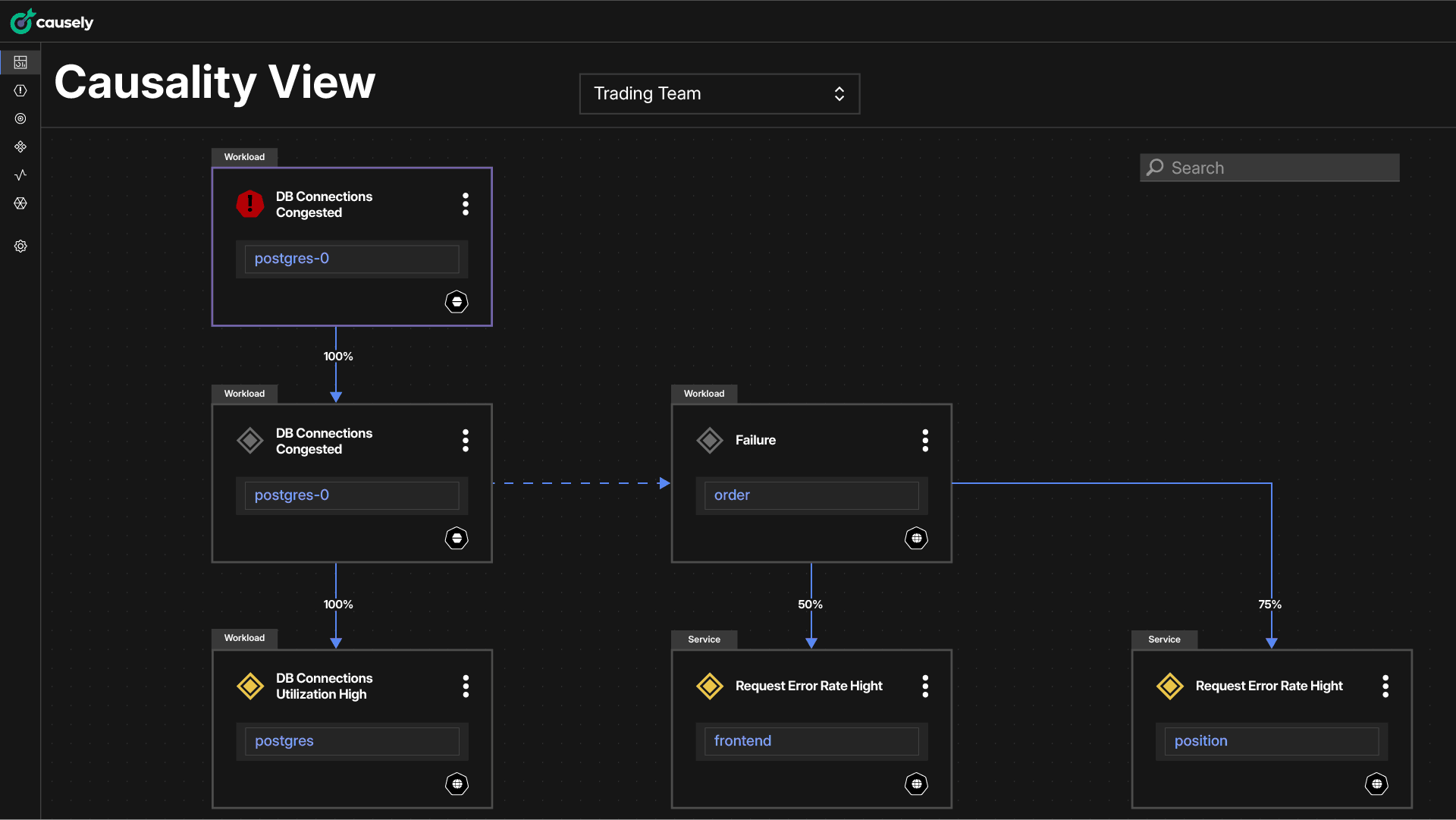
Causely, the causal reasoning platform for modern engineering teams, today launches a native integration with OpenTelemetry.
Causely
March 5, 2025
Bridging the gap between observability data and actionable insight
Endre Sara
March 4, 2025
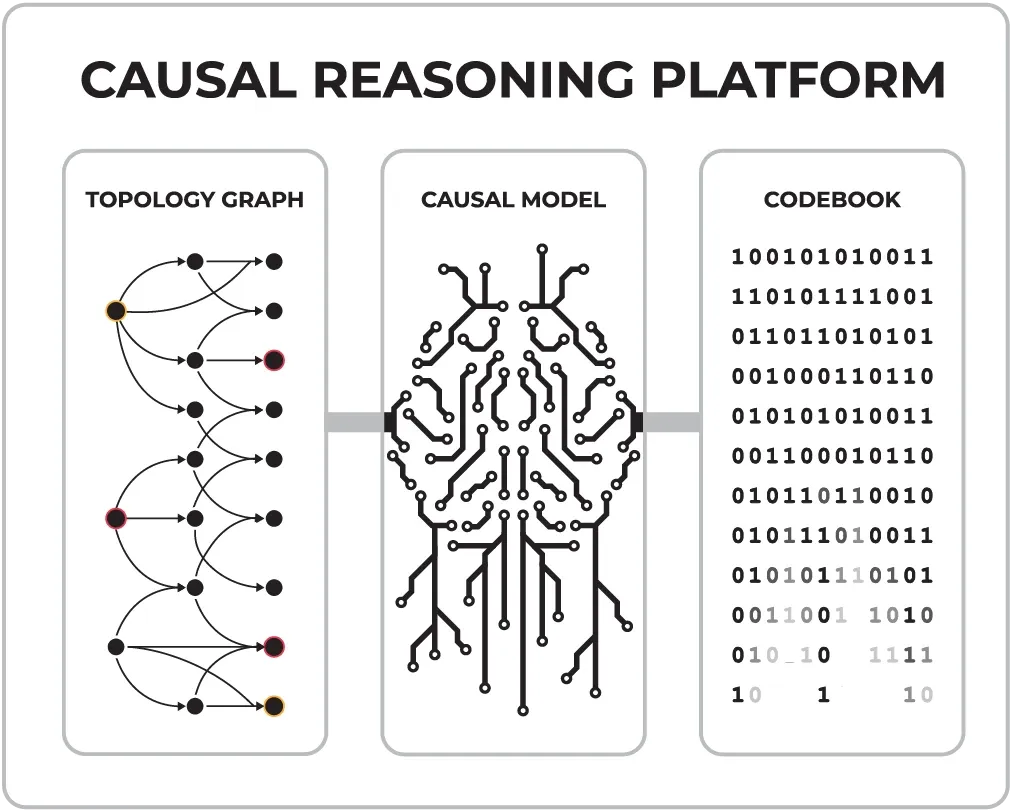
We’ll introduce the 6 common components and 7 AI Workers of our Causal Reasoning Platform, explaining how the platform works to enable autonomous service reliability.
Shmuel Kliger
February 3, 2025
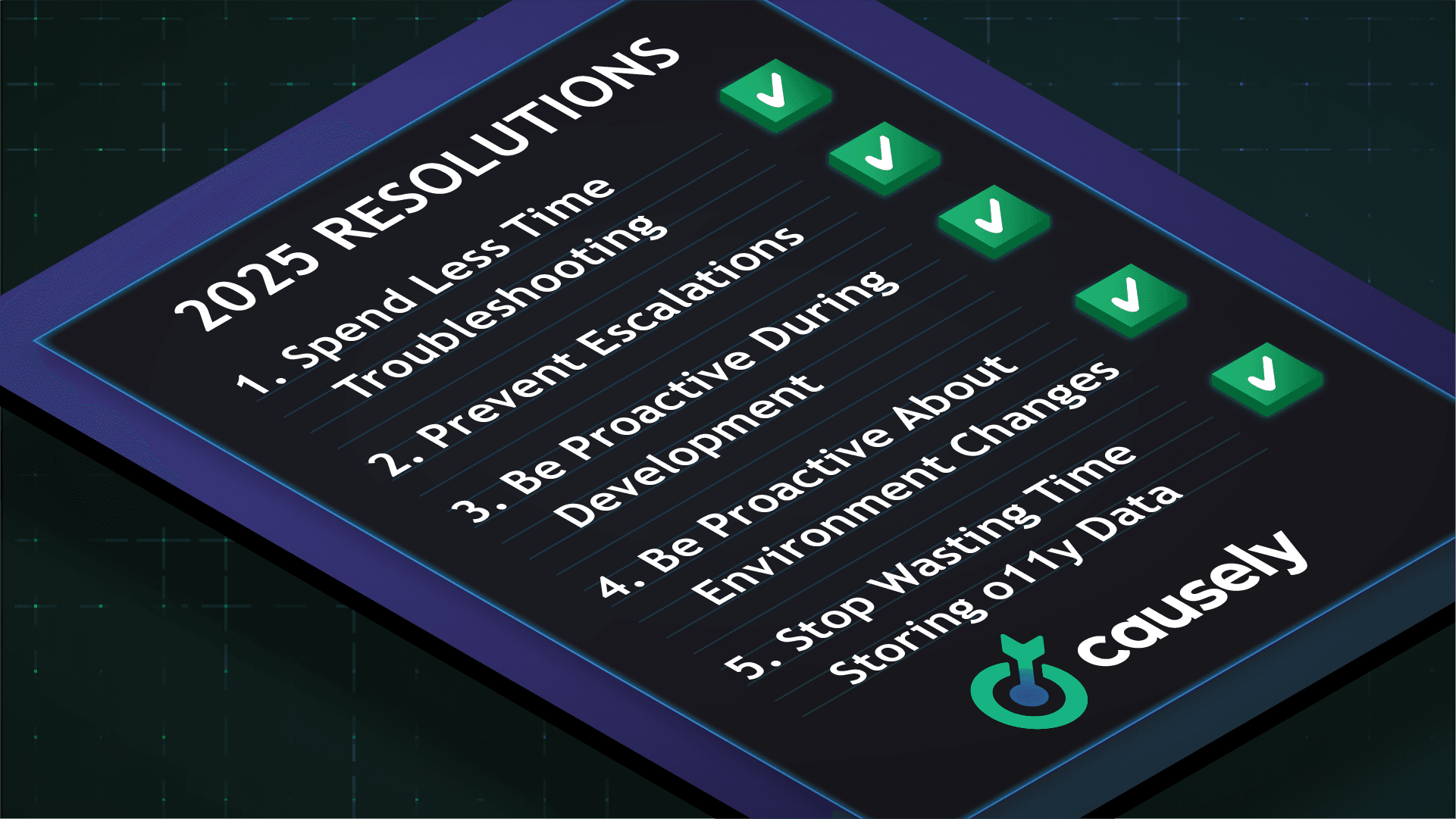
Collecting “more data” has been the defining characteristic of observability practices and tools for the last few decades. But over-collection creates inefficiencies, noise, and cost without adding meaningful value. This trajectory must and can be changed.
Shmuel Kliger
January 17, 2025
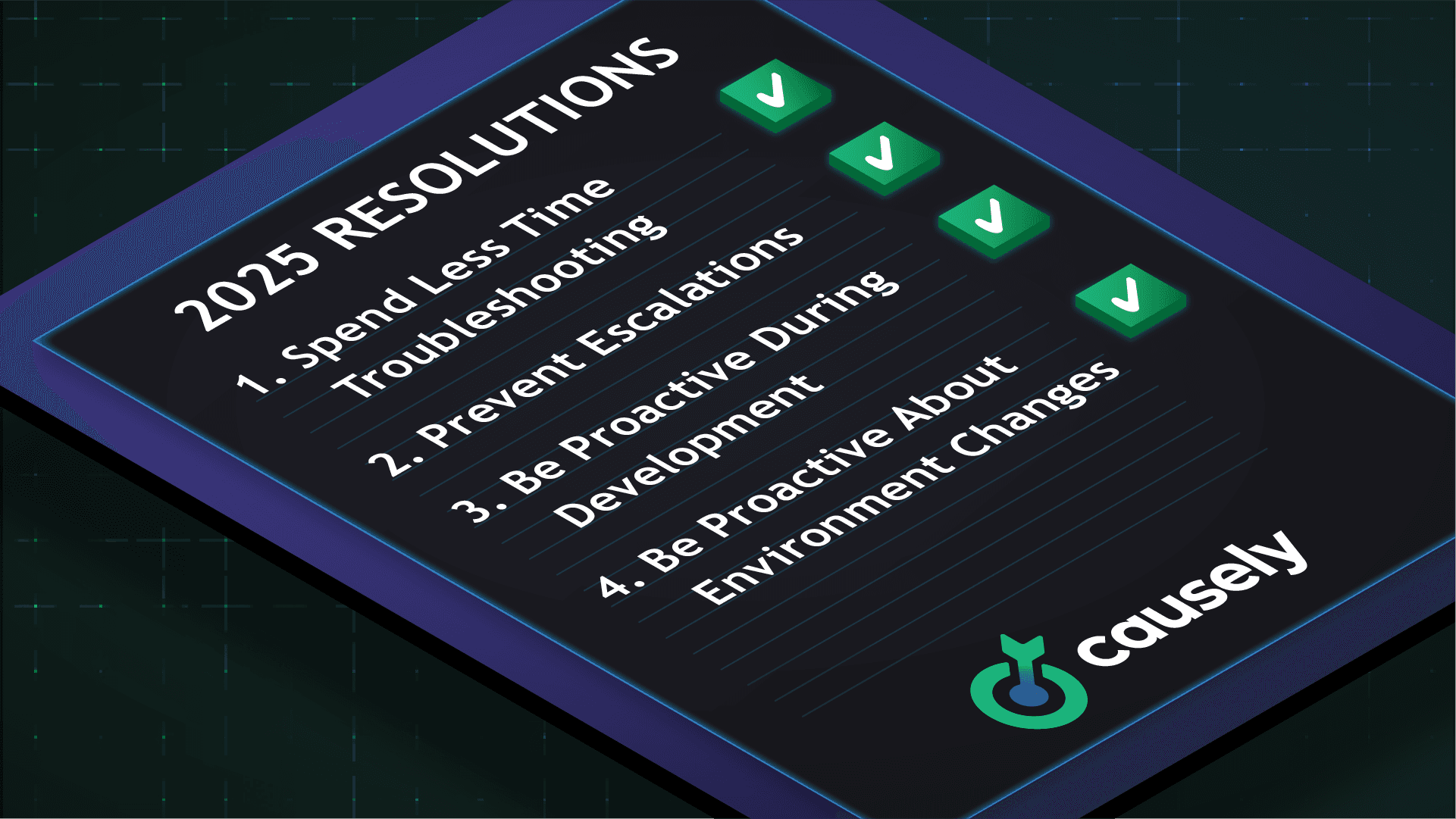
By identifying potential risks in real time, predicting future demand, and adapting resources dynamically, teams can maintain reliability even under extreme conditions. This isn’t about eliminating unpredictability; it’s about building systems that respond intelligently to it.
Endre Sara
January 16, 2025
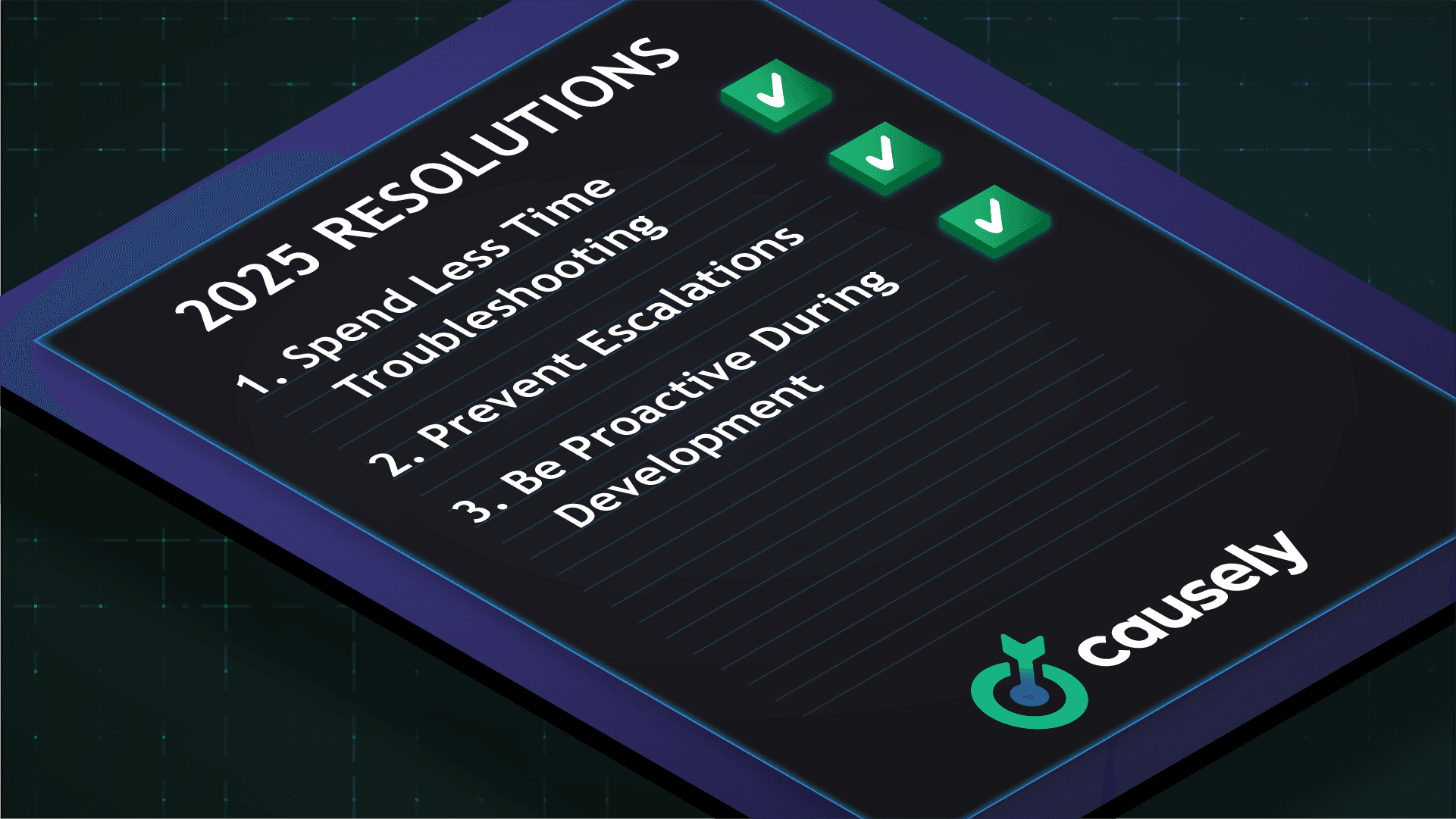
Making changes to production environments is one of the riskiest parts of managing complex systems. In 2025, let's transform how changes are made, empowering teams to anticipate risks, validate decisions, and protect system stability—all before the first line of code is deployed.
Enlin Xu
January 15, 2025
Explore the challenges of multi-team escalations, and the capabilities needed to address them. We’ll show how observability can be transformed to make escalations less contentious and more productive.
Steffen Geißinger
January 14, 2025
SREs and developers can make troubleshooting more manageable in 2025 by adopting systems that solve the root cause analysis problem.
Christine Miller
January 13, 2025
Read the Observability 360 announcement of all The O11ys 2024 winners. Best Use of AI Winner: Causely Many observability systems now claim to support Root Cause Analysis. At the same time though, most of these systems use algorithms – admittedly, advanced…
Ben Yemini
January 2, 2025
Adriana Villela (Dynatrace) and Reese Lee (New Relic) interviewed Causely Co-founder Endre Sara, along with several other OpenTelemetry users and contributors, during KubeCon NA 2024.
Causely
December 19, 2024
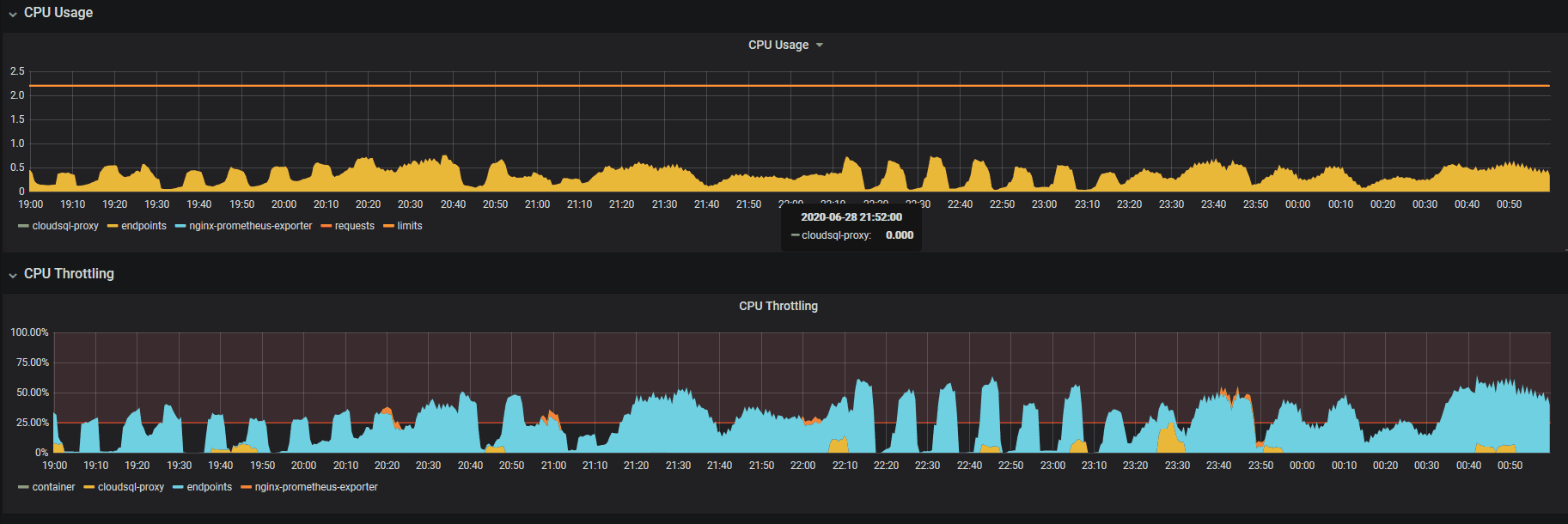
CPU throttling is a frequent challenge in containerized environments, particularly for resource-intensive applications. It happens when a container surpasses its allocated CPU limits, prompting the scheduler to restrict CPU usage. While this mechanism ensures fair resource sharing, it can significan
Causely
November 27, 2024

Assuring application reliability is a persistent challenge faced by every IT organization, complicated by rapid technology evolution and the increased emphasis on lean engineering. One trend among progressive companies is to designate a “Service Owner” who is responsible for making…
Yotam Yemini
November 18, 2024

Based on my LinkedIn news feed, it must be that time of year when thousands of open source enthusiasts congregate to talk tech at various parties, dinners, and other networking events surrounding KubeCon. In fact, we’re hosting a couple of…
Prashant Sridharan
November 5, 2024

KubeCon North America 2024 is around the corner! This year I’m especially excited, as it’s my first KubeCon since we launched Causely. The energy at KubeCon is unmatched, and it’s a great opportunity to catch up with familiar faces and make new…
Causely
October 31, 2024