





Give your ops agents causal context they can act on.
Causely gives your agents a live causal model of your system — delivered via MCP. So they stop guessing, burn fewer tokens, and act before things break.
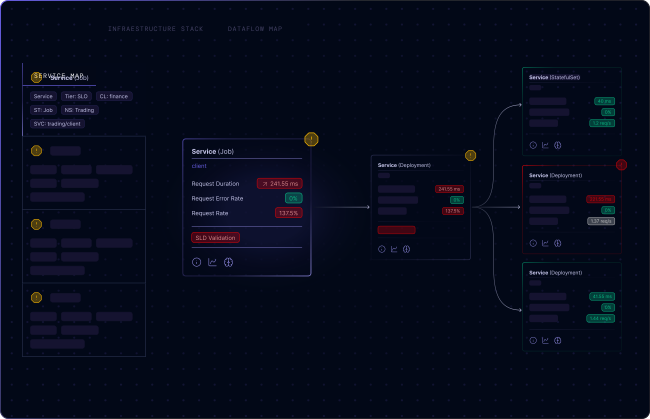

From raw telemetry to causal understanding
Causely turns your telemetry into a live causal model of your system so your agents know what changed, why it matters, and what's safe to do about it.
Give agents a causal graph of your system
Causely continuously builds a causal model of your environment — services, dependencies, failure paths. Your agent starts every workflow anchored to your real system, with structured, topology-aware context instead of raw telemetry dumps.
 Agents query live topology and dependencies via MCP
- Scoped telemetry retrieval, no broad environment scans
- Grounded in your real system, not generic pattern matching
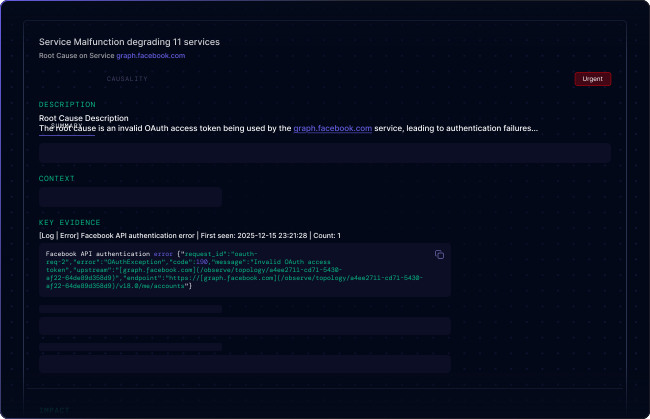
Diagnose with causal inference, not correlation
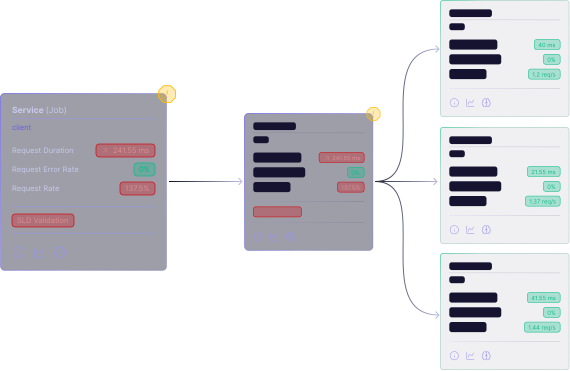
When symptoms cascade across services, Causely's causal inference identifies the single upstream trigger. Your agent stops chasing downstream noise and starts fixing the actual problem.
- Pinpoint the single upstream trigger across cascading symptoms
- Deterministic root cause — same input, same output
- Explainable reasoning your team can audit
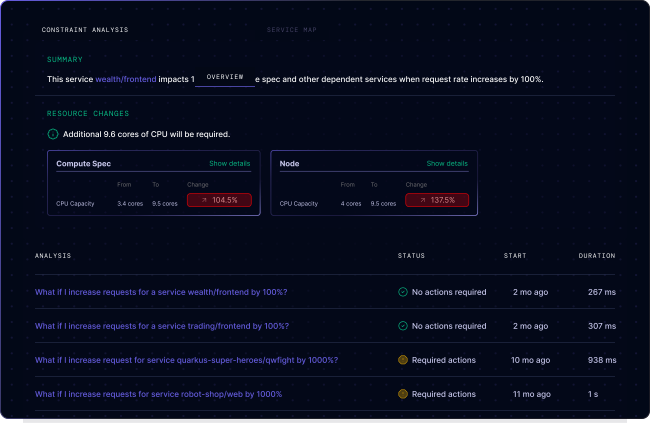
Let agents reason before they act
Before your agent remediates or ships, it can ask Causely what's at risk. Deterministic blast radius analysis and before/after deploy comparison — grounded in system structure, not inferred from correlation.
- Pre-deploy risk analysis across the fleet
- Blast radius from causal graph traversal
- Auditable postmortems and tickets from resolved incidents

How we turn data into intelligence
Causely runs a model-driven reasoning engine that builds a live semantic representation of your system. It works on top of your existing observability stack — interpreting what your telemetry means, not replacing where it's stored.

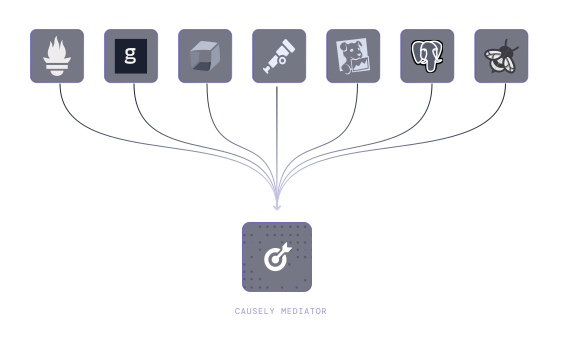
Connect telemetry with the Causely mediator
Distills logs, metrics, traces, and alerts locally into structured entities, relationships, and symptoms.
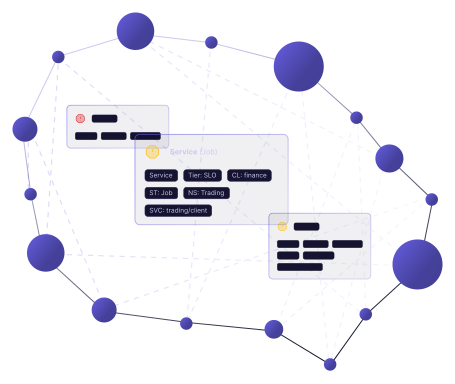
Generate a dynamic dependency graph
Combines a live topology of services, infrastructure, and dependencies with an ontology of entity types, failure modes, and constraints.
Live map of services, infra, and dependencies.
Definitions of entities, failure modes, and constraints.
Build your causal model
Turns structure and domain knowledge into a real causal reasoning engine.
Bayesian network modeling cause-and-effect paths.
Captures functional relationships and cascades.
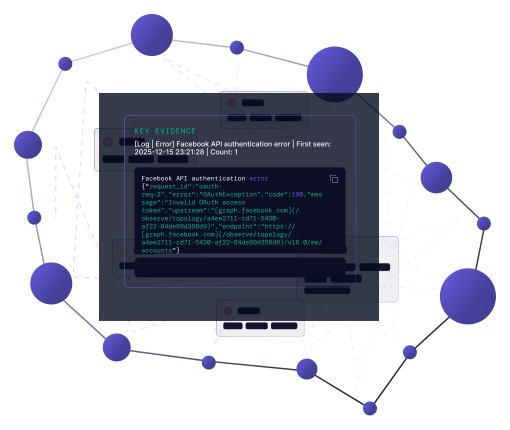
Run continuous causal inference
Identifies the true upstream cause from noisy signals in real time, and prioritizes what threatens SLOs over downstream symptoms.
Empower agents with causal context
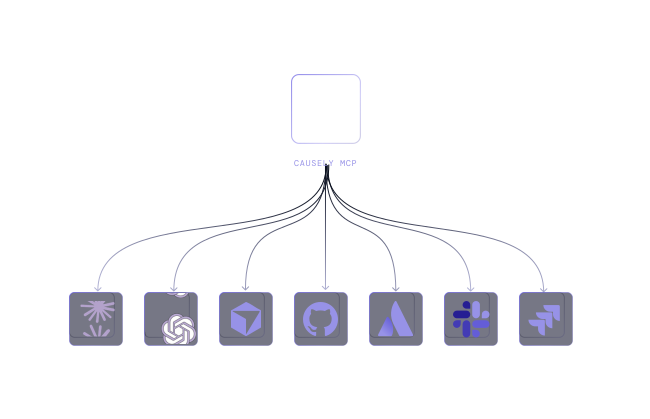
Connect your agents via MCP to give them everything they need to ground decisions, diagnose issues, and act safely.

What your agents do with Causely
Causely is built to make ops agents fast, accurate, and safe — across the full reliability lifecycle.

Autonomous incident triage
Agents surface root cause, blast radius, and fix actions in seconds. No alert storm, no war room.

Pre-deploy risk analysis
Agents compare pre- and post-deploy behavior across the fleet. Flag what's about to break before it does.

Proactive code fixes
Agents open pull requests from emerging reliability risks. Before the page, not after.

Automated postmortems
Agents draft postmortems from causal evidence the moment incidents resolve. Consistent and auditable.

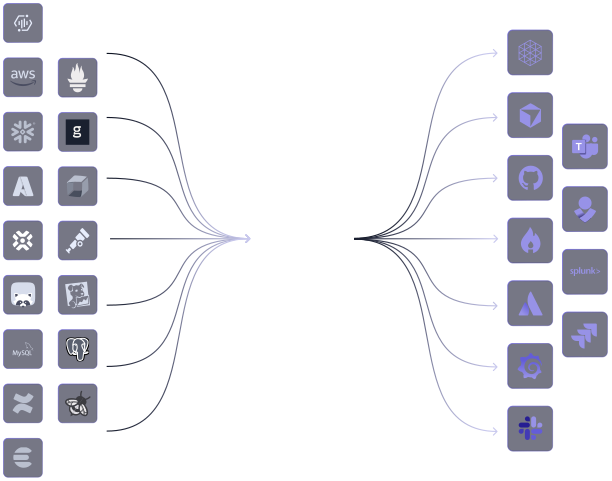

Seamless ingestion
Ingest traces, metrics, and logs from your current observability tools with no data duplication or operational overhead.
No code changes
Agent-agnostic

Your environment, your control.
Causely runs on a split architecture to ensure maximum data privacy and control over your environment.

Data minimization
Raw source data is retained in your environment and never transmitted to the SaaS backend—only distilled symptom state.

Zero sensitive data storage
We don't store or process any sensitive data or PII, and all transmitted data is encrypted both in transit and at rest.

Minimal privilege by default
The mediation components operate with minimal privileges, while specialized components can be controlled or disabled.

BYOC
Teams have the option of a bring-your-own-cloud model, where the entire application runs in your environment.

Your agents are ready. Give them the context to act.
Causely is the missing layer between your observability data and autonomous operations.